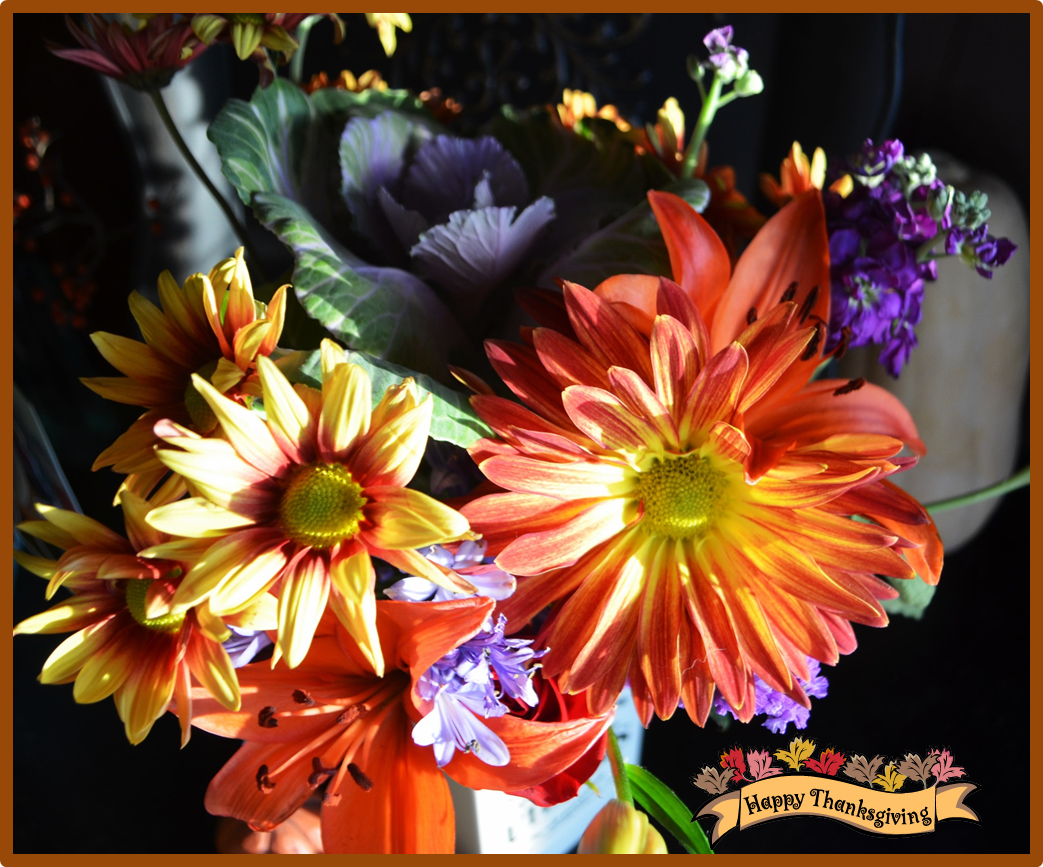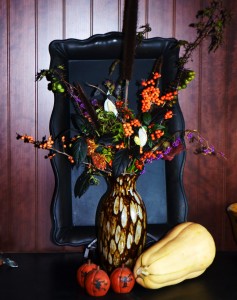
Wishing you all a warm wonderful holiday filled with family,fun ,and love. Throw in some great food and a bottle of wine or two and of course, a beautiful floral centerpiece and it can’t help but be perfection!
Happy Thanksgiving and safe travels
I spend a lot of time out in the garden, by myself, with only the plants and critters, no humans (sometimes thankfully) and therefore no chatter. Most of the time I am A-OK with this as I pretty much enjoy solitude and find it relaxing to have my mind drifting while my body is working. But, oddly, there are times when I wish there was conversation or company and my busy brain wants more stimulation than worrying about rabbit damage and lack of rainfall. So, I do what any self-respecting adult gardener would do….I play make believe with the plants.
As a child I had a wildly super over active imagination ( double superlative necessary). I was a pro at inventing games, scenarios, and drama with dolls and toys inside and anything Mother Nature could give me outside. I loved to be in the woods and created busy little words where the insects had names and families, and I will elaborate no more lest you think my mother should have committed me,but you get the idea, huh?
Now ,I chit chat with the plants about their health and performance and even create little contests with them like; who will bloom first? who can continue blooming the longest? and most importantly here; who is blooming last? To be fair I usually make them only compete with their genus siblings during the season (first rose, first clematis etc) but the actual first of anything in the Spring and last of anything in the Fall always get special attention.
First of anything is almost always the siberian squill, even though by rights it should be the early snowdrops. The squill has a location advantage as the snow cover melts there early, which I explain to the snowdrops so they won’t feel insecure.
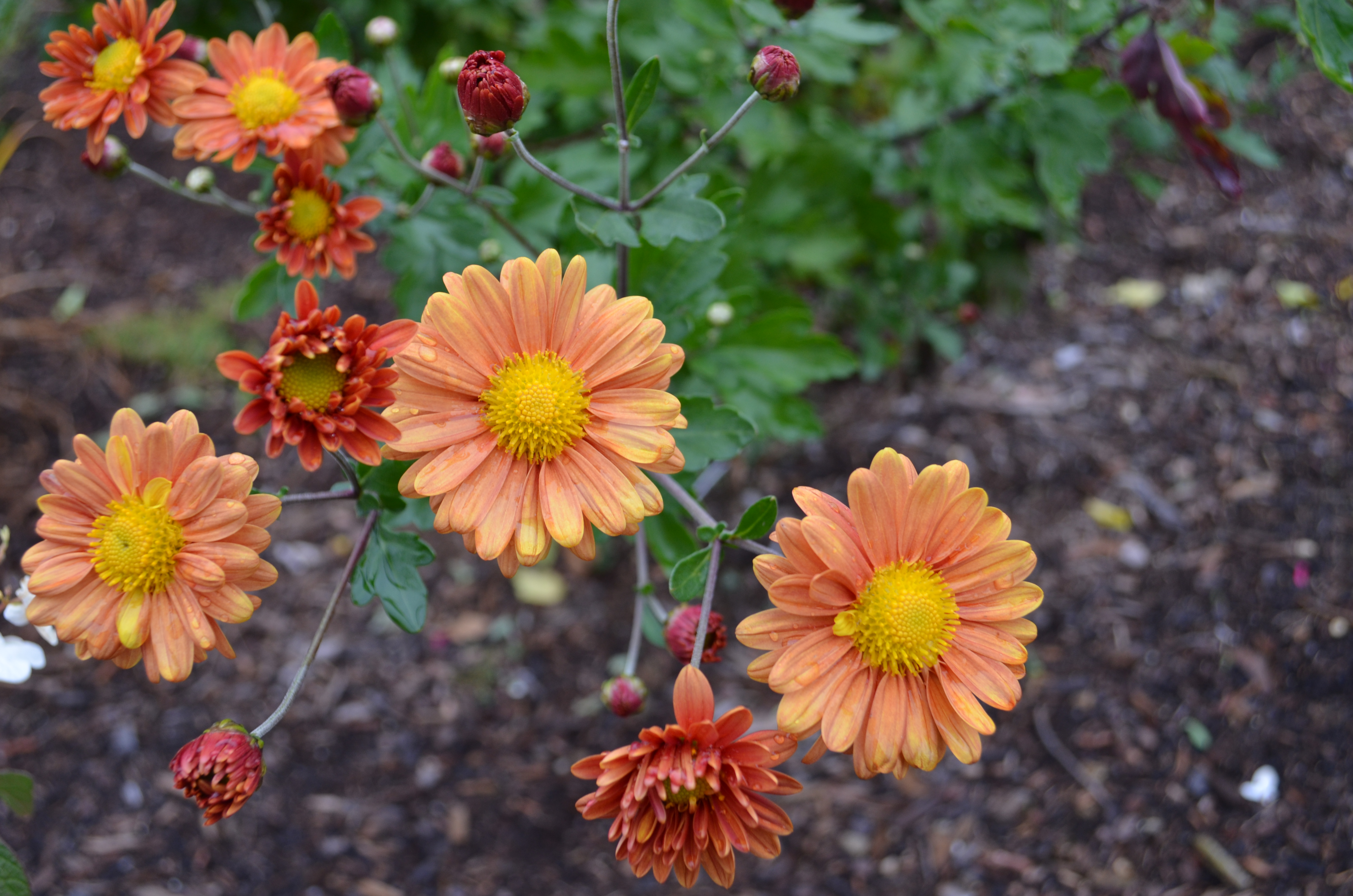
Last of anything used to be the chrysanthemum x rubellum ‘Copper Penny’, and it held that title until a new addition a few years ago stripped it away. Now last of anything is a chrysanthemum called ‘Will’s Wonderful’
I will pause here to muddy the waters a bit with nomenclature and breeding history , skip this paragraph if that bores you.
Chrysanthemum x rubellum, recently volleying back and forth from the genus chrysanthemum to the genus dendranthemum, has a very murkey origin. Breeding in the 1930’s using a mum misidentified as chrysanthemum coreanum (Korean) which was actually chrysanthemum zawadskii v.sibiricum, led to a group of hybrids referred to as Korean mums.
A different breeder then “discovered” what he thought was a new species and growing in Kew Gardens and named it rubellum although it was later determined that rubellum was just a vigorous strain of the chrysanthemum zawadskii already identified and growing in what is now Slovakia. So this plant should have been called to be correct (deep breath) chrysanthemum zawadskii v sibiricum robustrum.
Breeding ensued using this mum of many names, so now this ‘group’ of mums and their progeny are all called by all sorts of names, none 100% accurate and no one cares. Some call all the mums bred using rubellum the Rubellum group, some call them the Sheffields ( after the popular Sheffield Mum) and to some they are and always will be the Korean group. Whew.
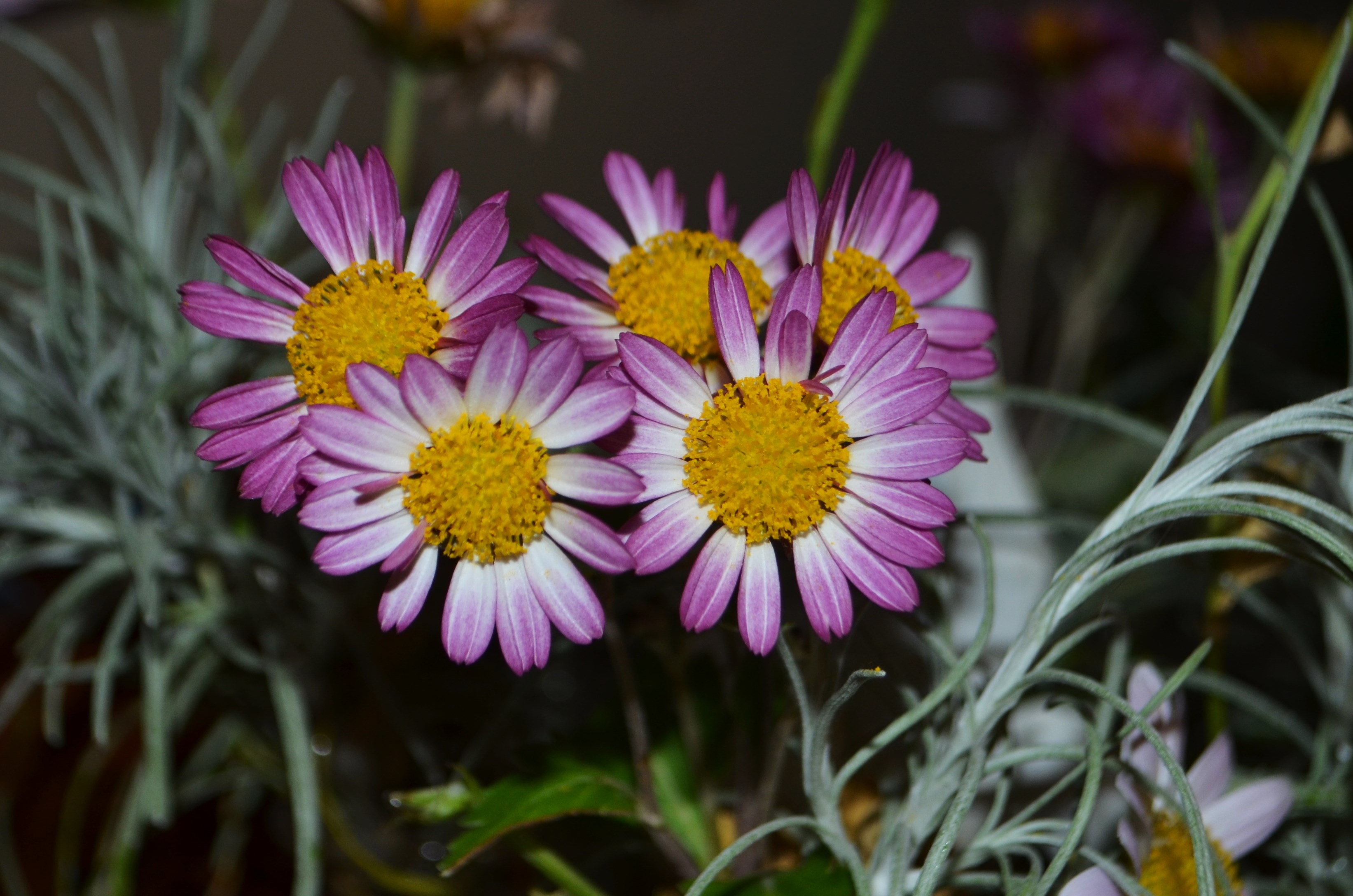
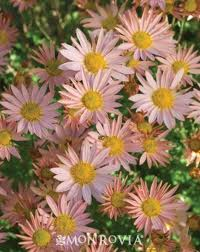
Whatever you call him, ‘Will’s Wonderful’is just that. I originally bought it because of the name ( my Wil deserves some tribute out here), but Will the plant has more than earned his place in the garden. The foliage has a blue gray hue and is sharply scented. The plant itself is extremely hardy and does not need pinching to stay upright like the others in his clan. Blooming begins in October with bright red buds opening to strawberry red petals that fade to whitish pink as you get closer to the sunny yellow center. They are still in full bloom and bud here in mid November after many nights in the 20’s, lots of frost and even snow.
I cut a bunch 2 weeks ago and put them in a vase on my desk, and here they are today, still looking as fresh as the day I brought them in.
The only source I know for them is Lazy S Farms, and that we even have that one is only due to a request from Margaret Roach when her source, Seneca Hills Perennials , ceased to offer them.
Plant Will, grow Will, love Will, he really is wonderful.
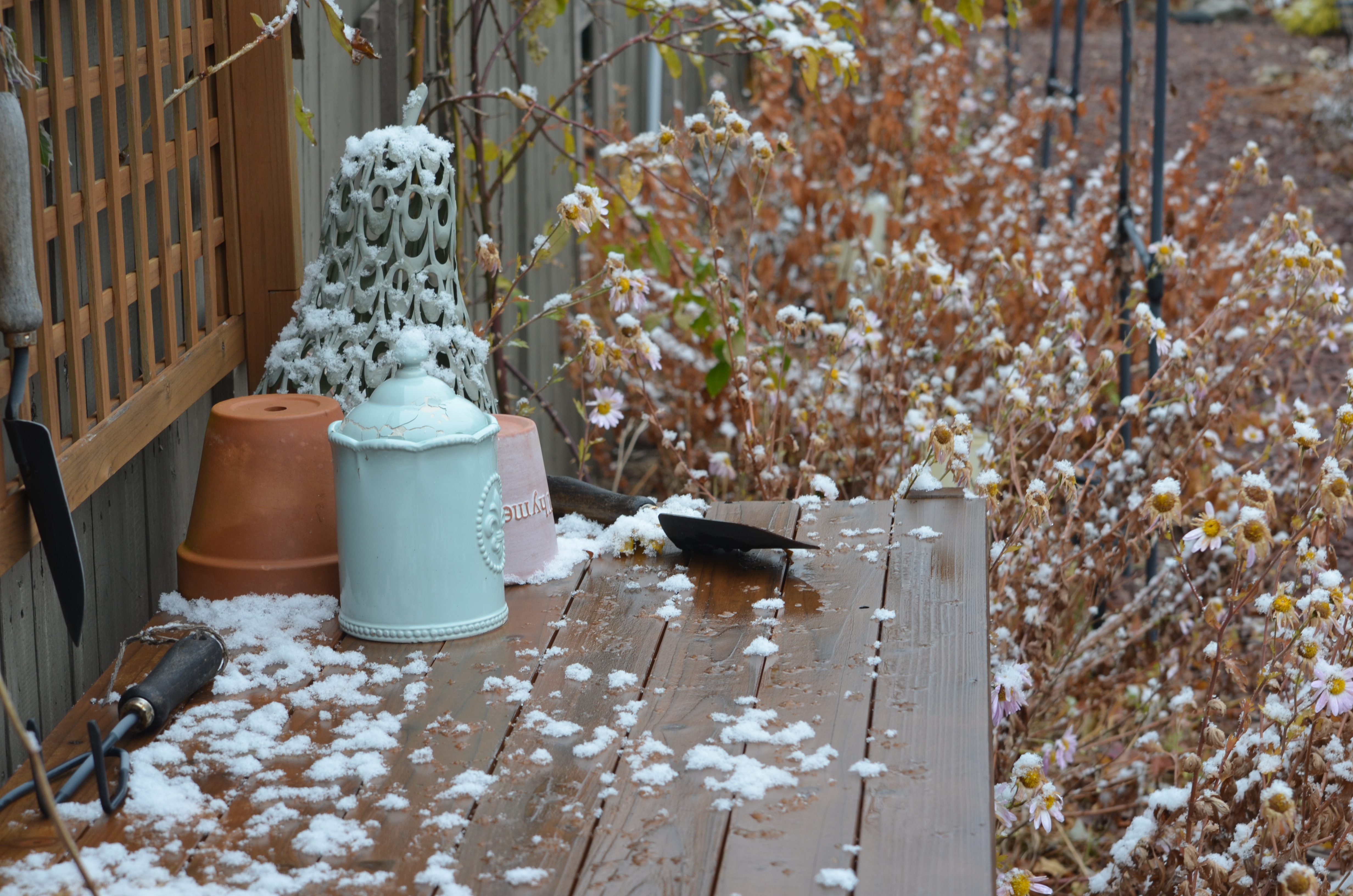
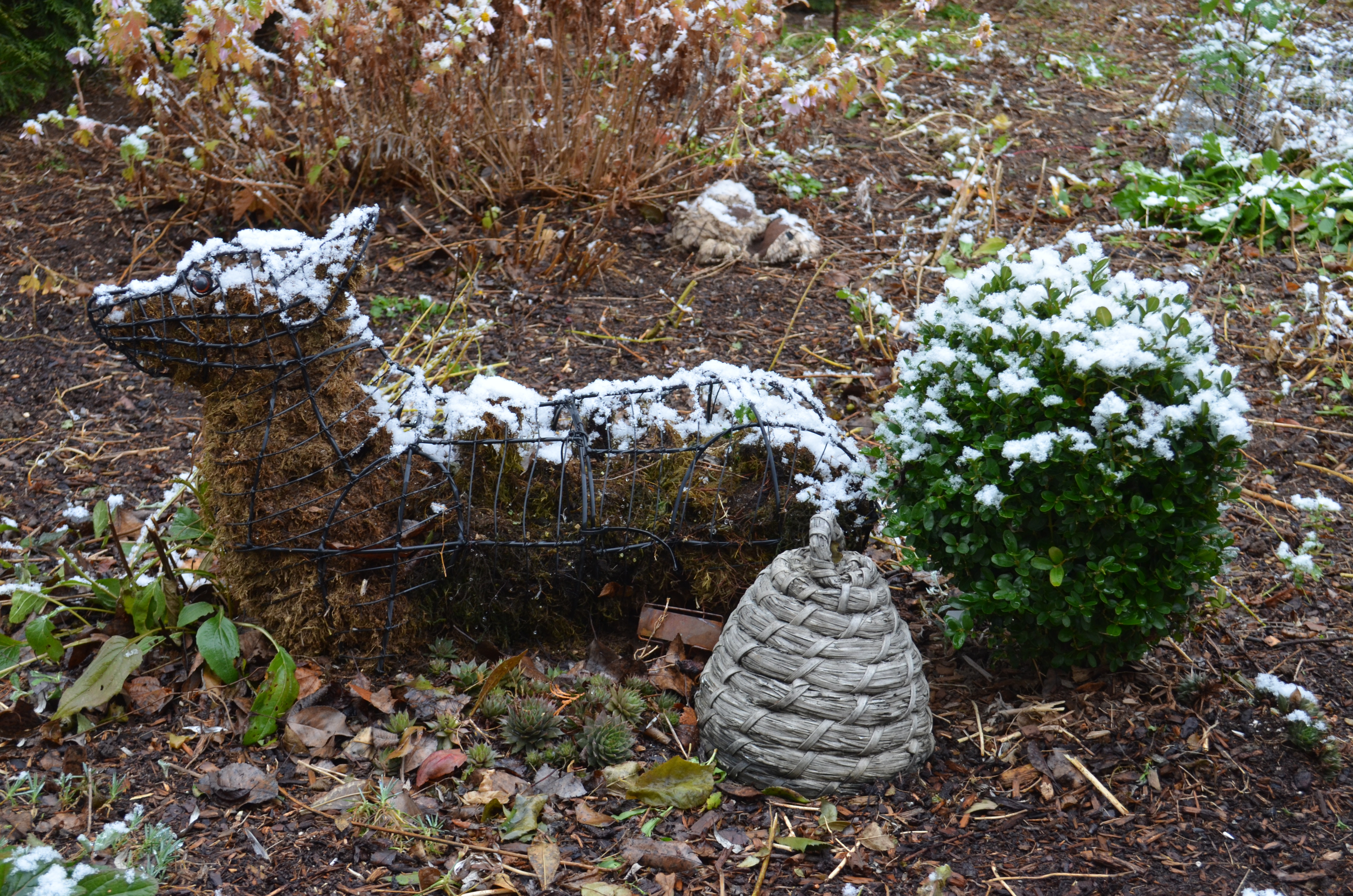
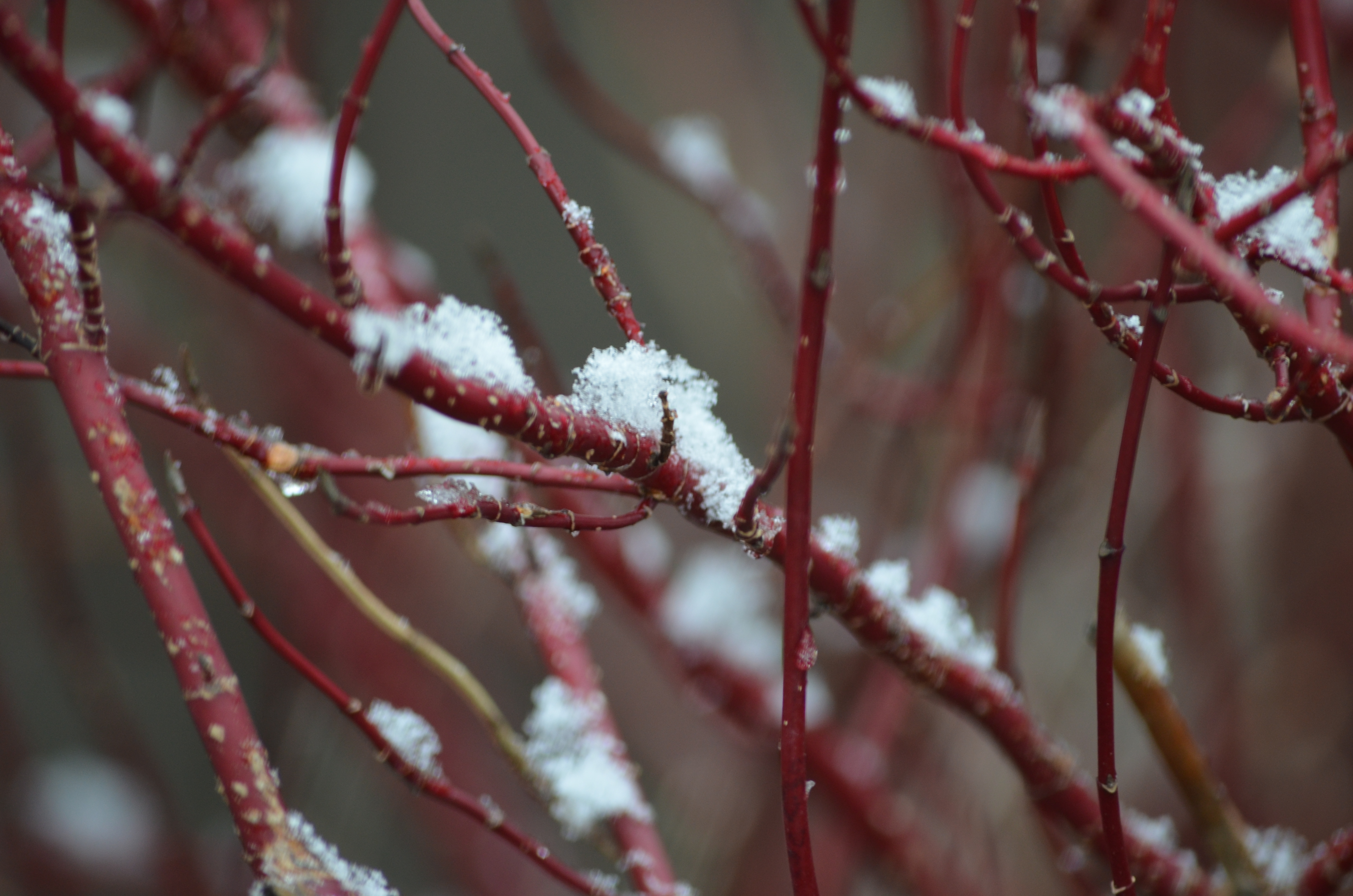
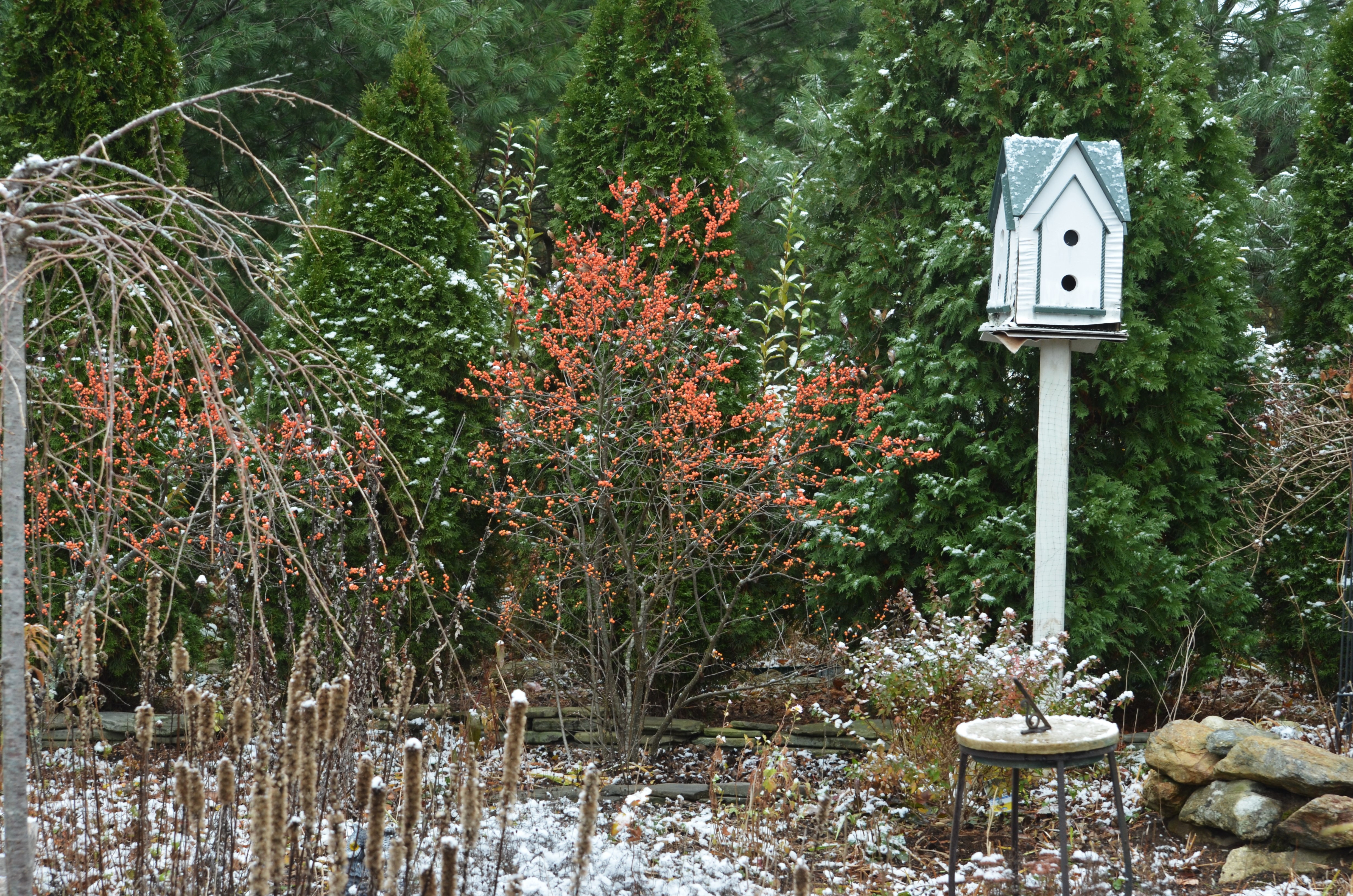
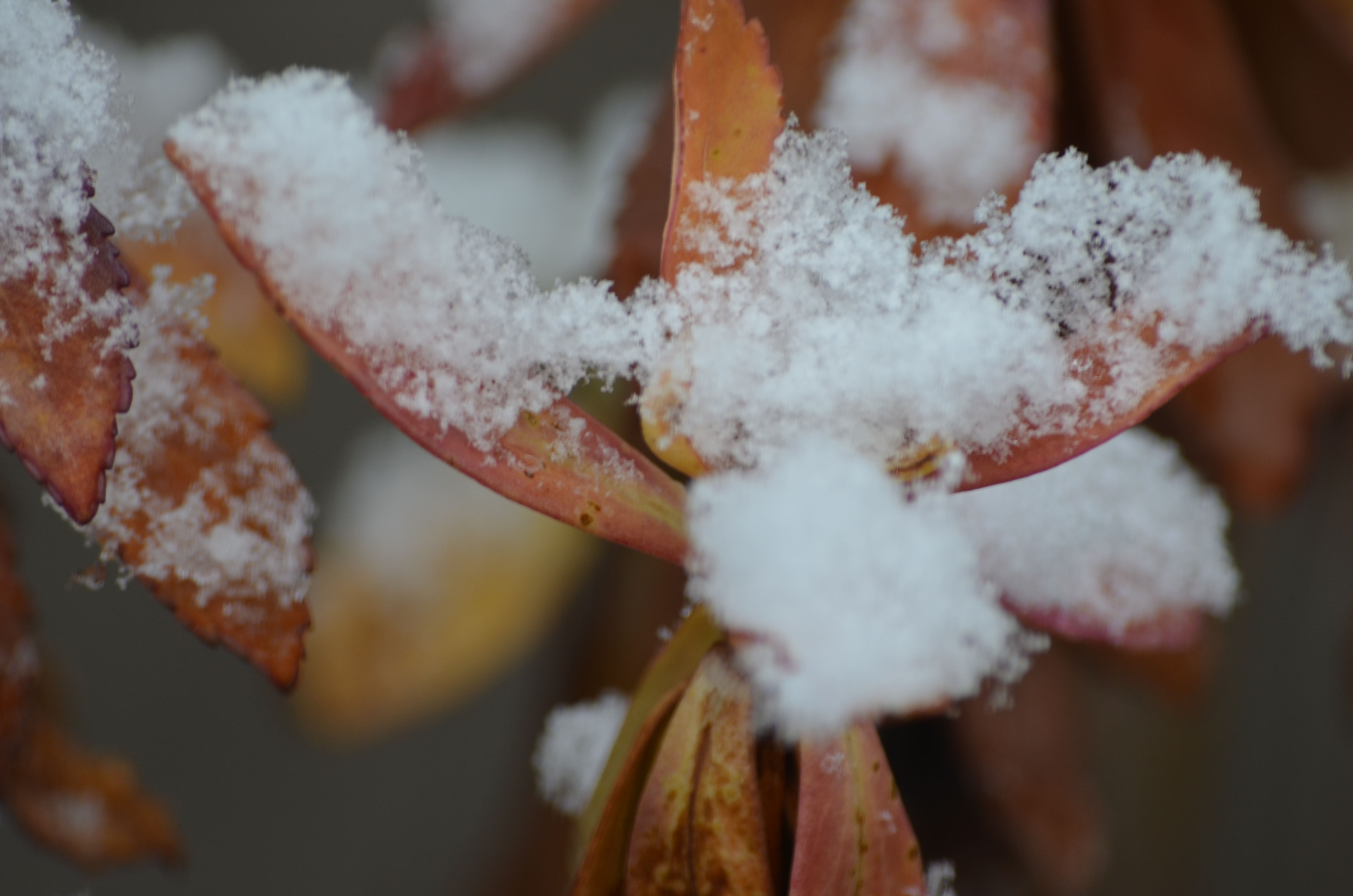
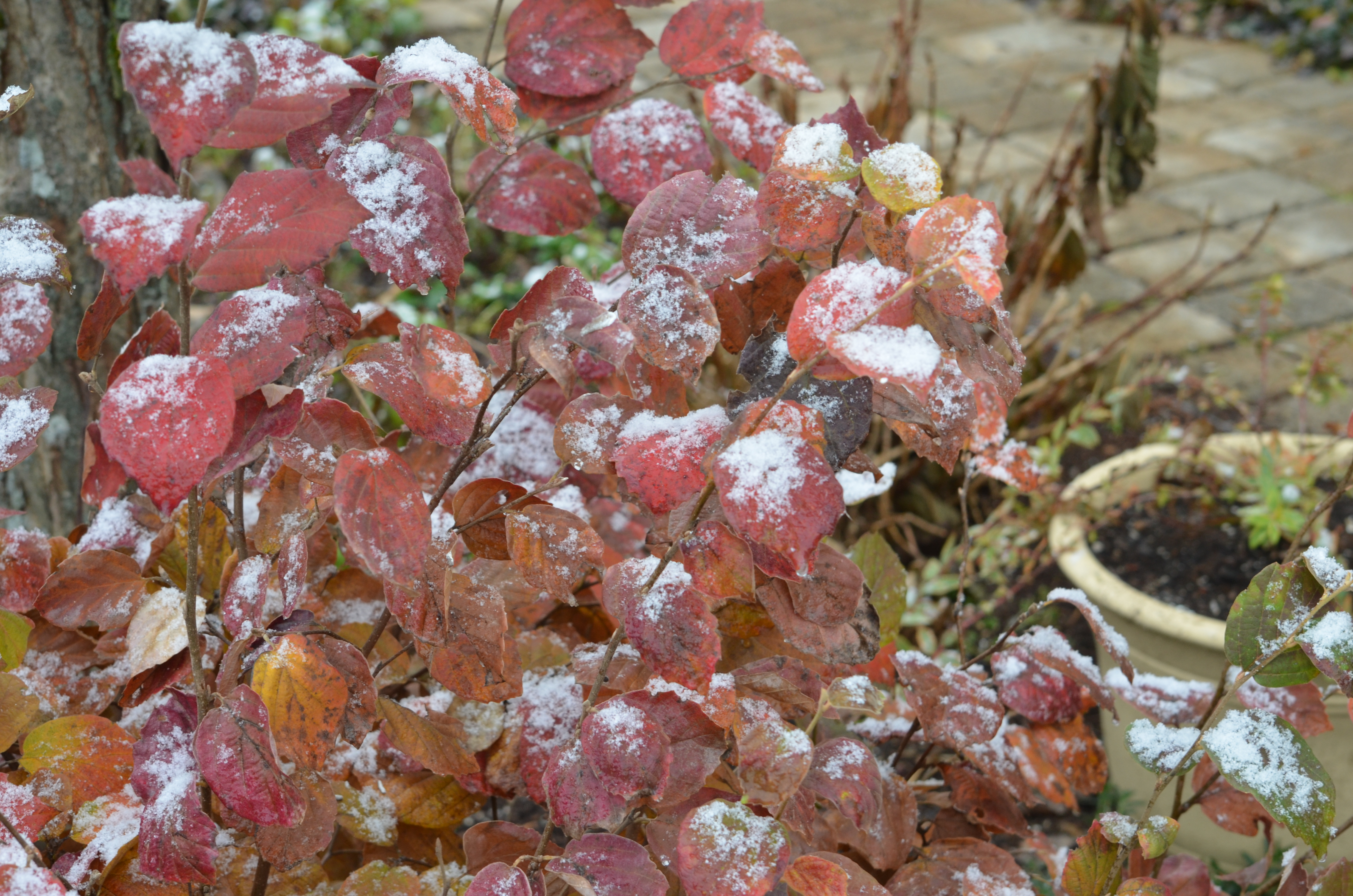
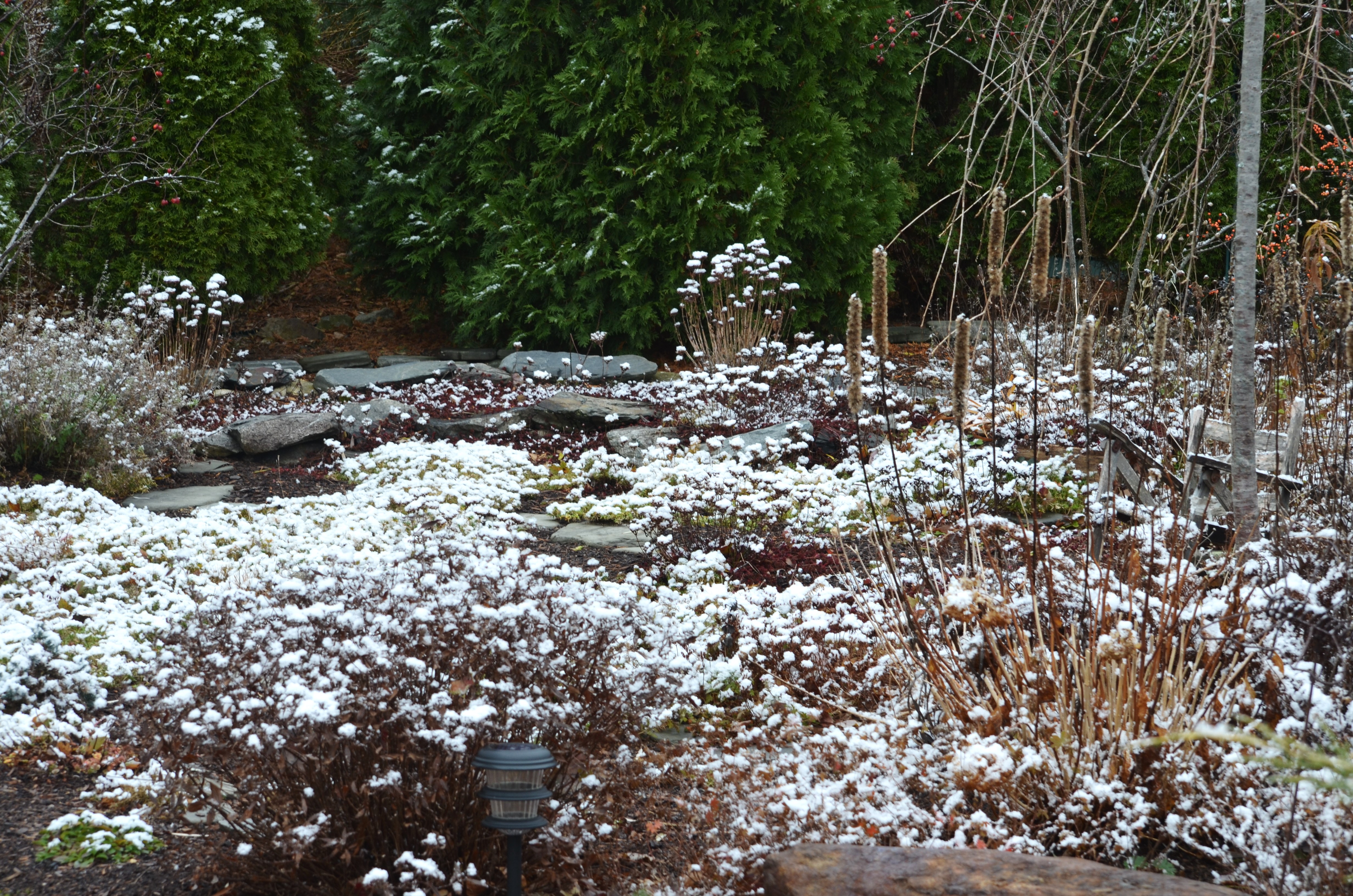
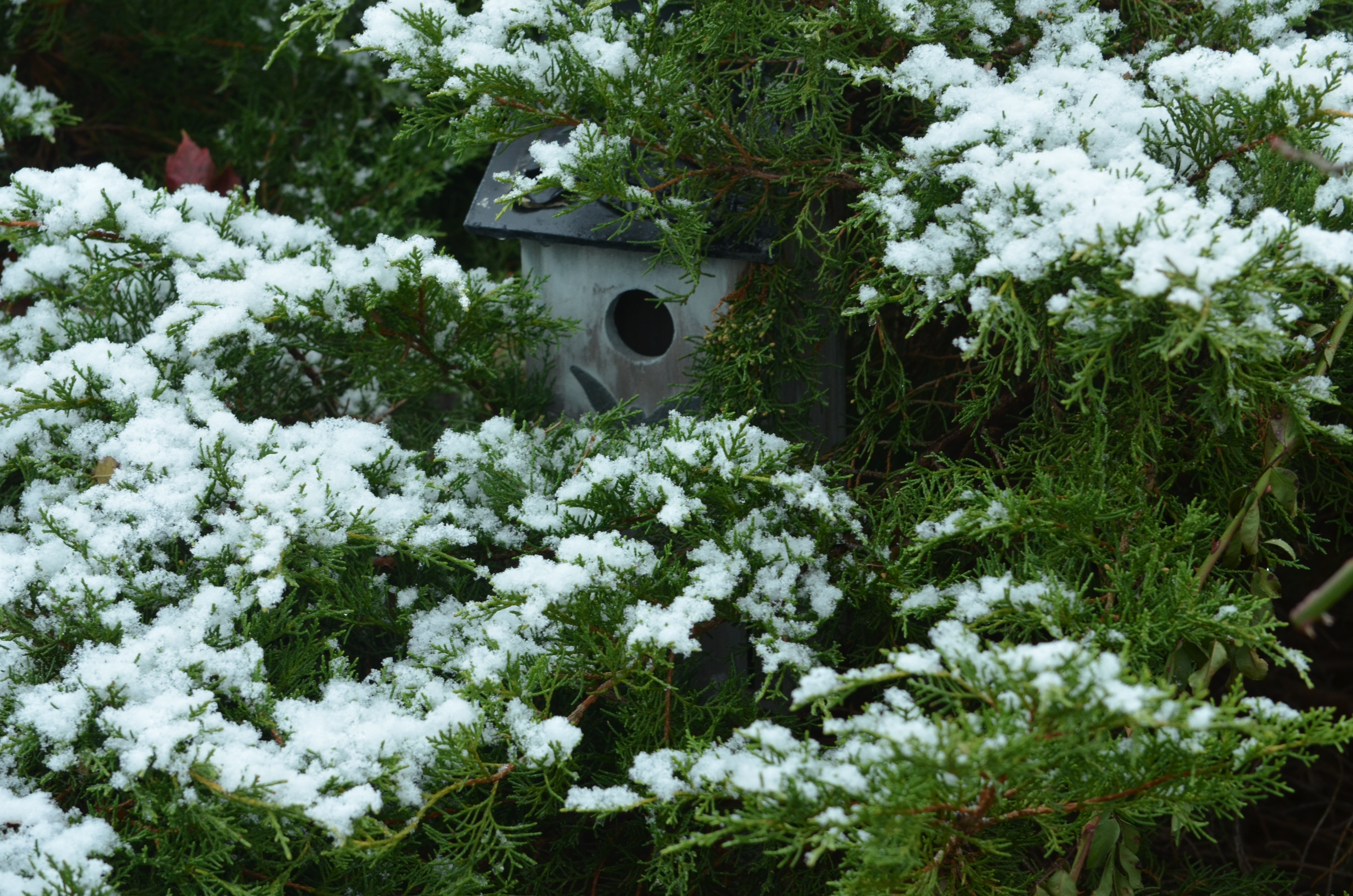
This morning we received our first snowfall of the season and I did something highly unusual for me, I got up, pulled up the shades and climbed back under the covers to watch the snow fall.
As a mom, mornings involve me dragging myself out of bed to supervise the girls and approve outfit/makeup choices etc. I am in no way a morning person, so coffee is a necessity to get through the dressing/re-dressing and yet again more re-dressing that is a teenage girl’s norm. By the time they head off to school I am totally awake and it is on to the drudgery of laundry, tidying, and getting myself ready for the day. But they had today off.
As a gardener, November winter weather events involve worrying about chores not done, bulbs not yet planted, and the consequences of snow so early in the season, but for some reason none of that seemed to matter, and I lay back all cozy in my bed to enjoy the sheer wonder of the first snow .It was simply enchanting.


Fall gardens can be so full of color and texture, you just need to be in tune to what to look for. Instead of masses of flowers and riots of color, there are great textures, unusual forms in seedpods and exposed branches and color combinations that are more muted yet still pretty cool. I love the look of my fall garden. There are still a few things blooming ( 3 different varieties of mums , some of the hardier annuals, a smattering of roses and of course the abelia and gaillardias which just never seem to stop. Berries abound on the hollies, callicarpas and viburnums, and they and the rose hips offer color as well as food for the birds .
I went out and cut lots of hips, copper penny mums, small branches of spirea ogon and beautifully colored leaves of geranium microrhizum for some arrangements and was pretty impressed with all the color and texture still out there to enjoy.
Scroll through the slideshow to see how life looks in The Burrow in late fall….
[cincopa AYCAZUrHaIrQ]
and ps.. I tried to upload the slide show 3 times which took FOREVER! and I hate that the caption and picture number are popping up, but I refuse to do it a fourth time
This week brought us here in central MA our first series of really cold nights and accompanying frost. Did you know there is more than one kind of frost?
Do you know how to tell if any of them are coming your way?
Let’s start with a definition; frost is really just referring to the sudden onset of freezing temperatures in your garden. These temps may be only brief and temporary, but they will damage your plants. I am no meteorologist and this will be a very non-science-y (read “simplified” ) discussion, but in a nutshell…
Black frost is when the air temperature is below freezing but moisture remains in the air instead of condensing on the leaves therefore no ice forms on the plants but the freezing temperatures damage the cell structure of the plants and they turn black. You wake up and think you escaped unscathed when you see no tell tale white coating, but later in the day most foliage of tender plants is mushy and black.
Frozen dew is when water vapor in the air forms droplets on the plants. As the temperatures plummet, the droplets will freeze into ice , also causing the plant to suffer and blacken.
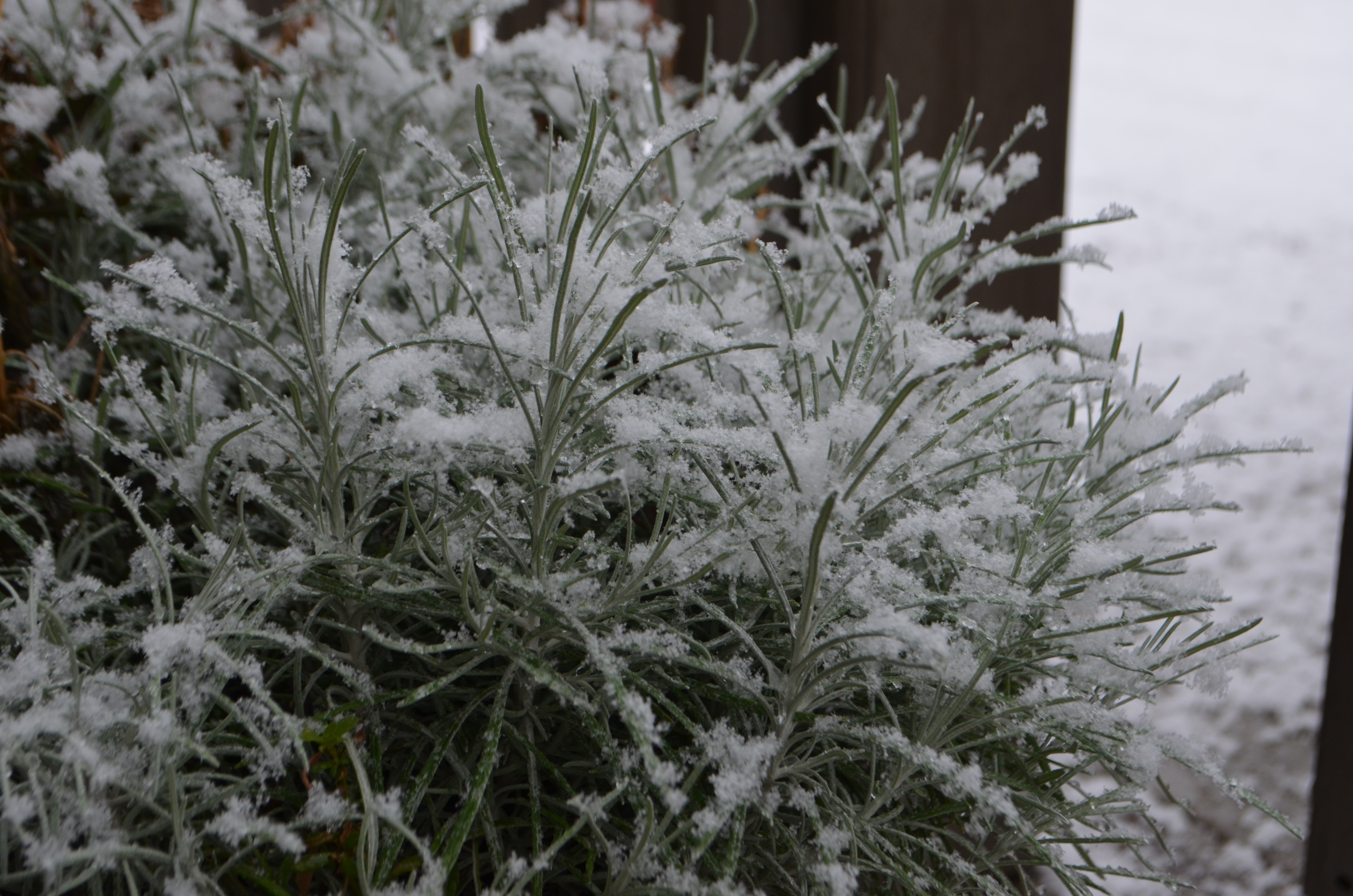
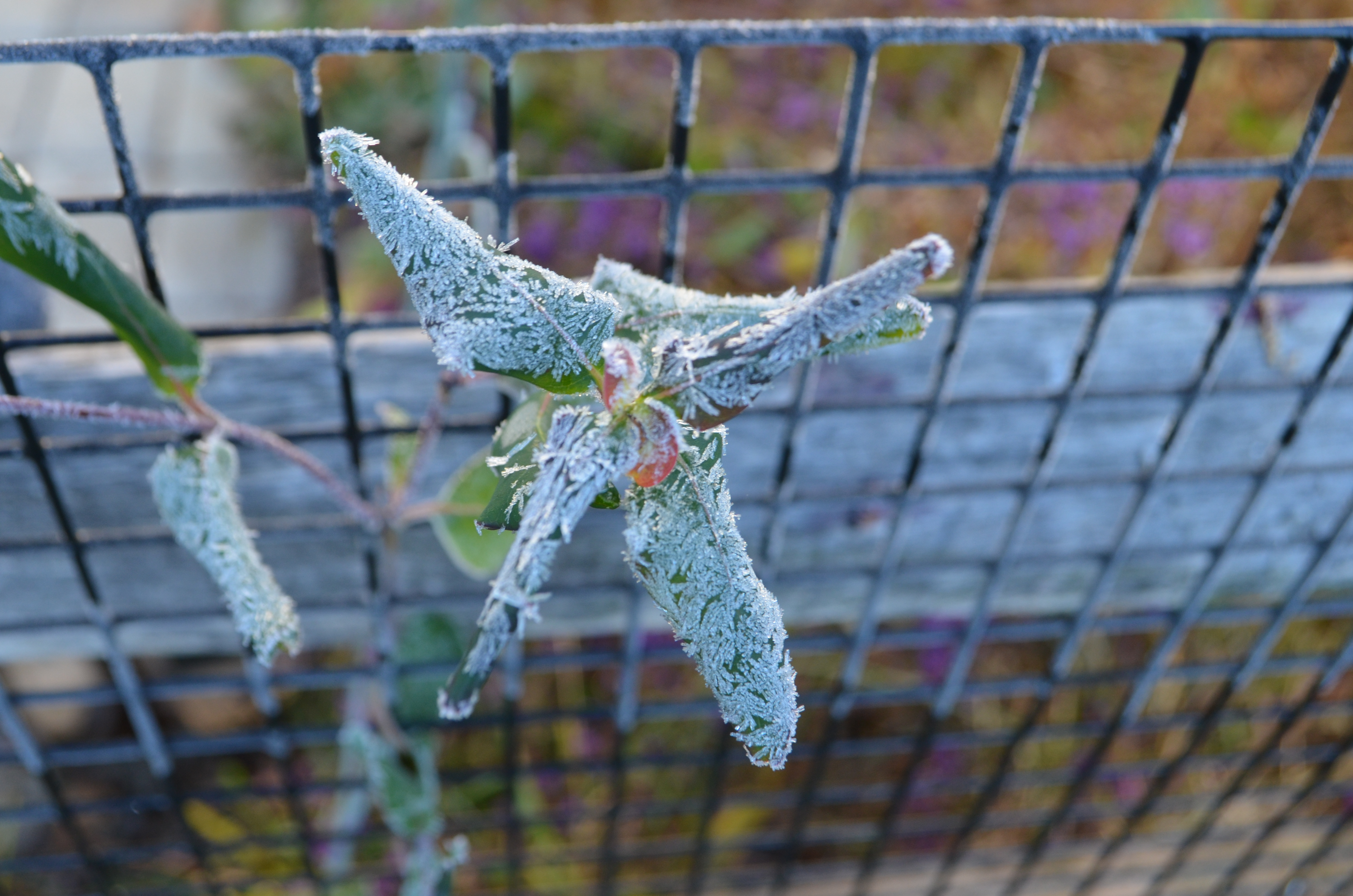
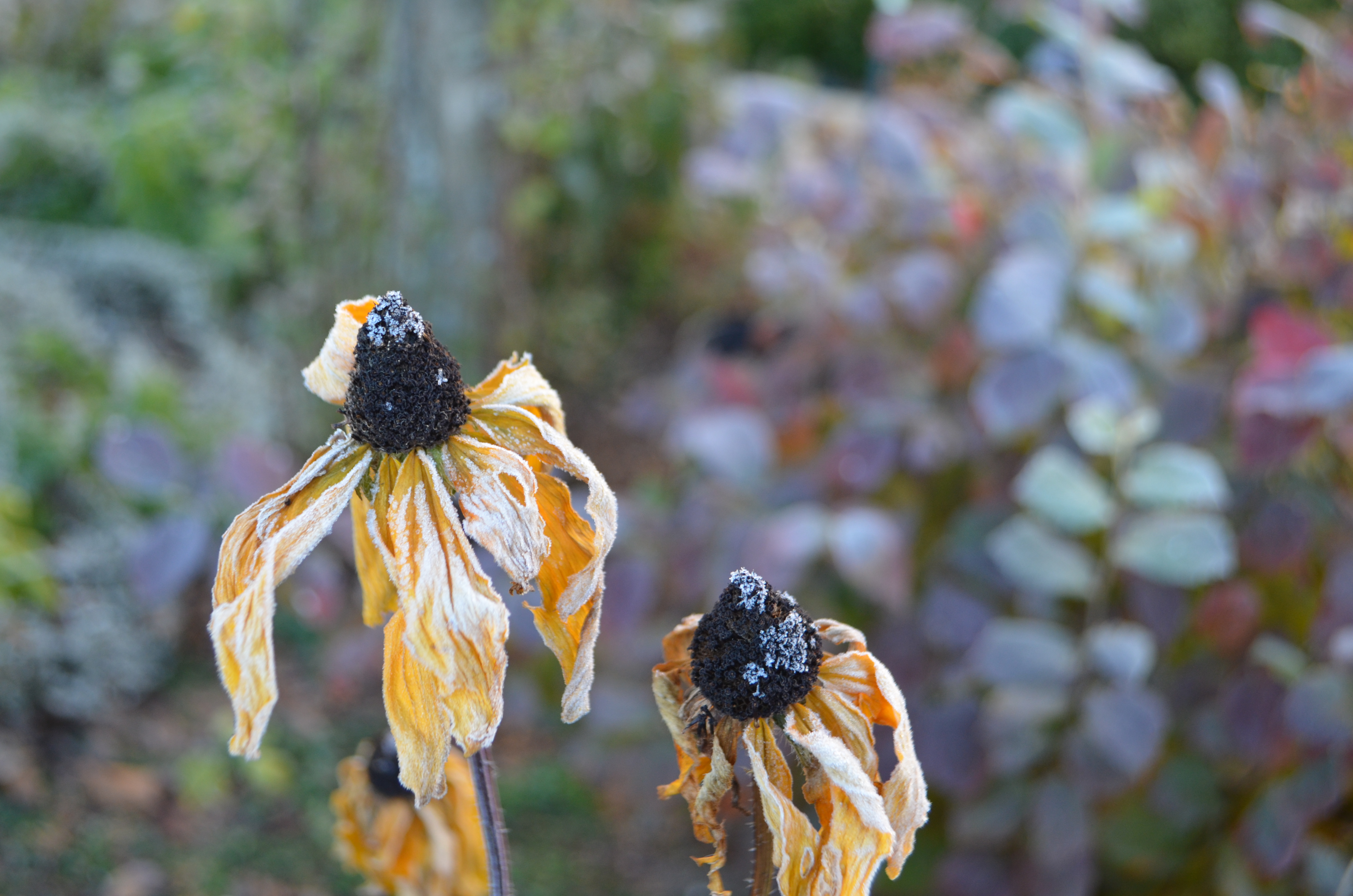
Hoarfrost or white frost is the pretty one. My wise guy hubby calls it frost for money because he is childish and prone to fits of off color humor. During a white frost the dew point temp. is below 32F and the temperature drops below 32 and reaches the dew point. Water vapor in the air is transformed into ice which forms on the plants as crystals and can be breathtakingly beautiful. Hoarfrost on flowers and leaves that have not yet been blackened is stunning.
This kind of frost is also seen as good ole Jacks’ calling card on your windows and frequently makes me late when I forget to allot time to scrape the car.
Frost occurs either from radiational cooling -meaning the earth cools below freezing at night after the warming sun sets and the cold ground temperatures cause what is usually a mild frost (the kind you can cover plants with sheets and buckets like a crazy person and have them survive) or from a really cold (like polar cold) air mass moving in to your area which will cause advection or killing frost ( in which all tender foliage shall be blackened and die. The end).
Frost is also dependent on relative humidity, as well as the microclimates in your particular yard, large bodies of water in proximity, which season it is occurring in ,and soil temperatures.
So what’s a gardener to do? Well, you could get sling psychrometer to help you measure relative humidity, follow the weather and make frost forecasting charts based on temperatures drops, invest in an expensive home weather station, or do what I do which is sign up at a weather service .com (I use AccuWeather) for weather alerts in your area. I have my alerts sent to my email address, but most sites now have phone apps as well. Then when you see a frost warning in your area, assume you are going to be hit and act accordingly. Frost predicting is a very inexact science because so many variables affect it , so you may get hit and the next town or even a few streets away will not. Also you can watch your own yard through a few frosty and/ or very cold nights and see which areas get hit first and which seem to hold out longer. Cold air runs downhill so areas that are low in your yard will be affected first. Know them, and don’t plant your veggies in them.
I always protect my annuals through the first several light frosts and can thus keep them going usually into very late October or early November.
Be aware though that once you have been “frosted” in the fall, the warnings stop as the weather people figure you are smart enough to know that after the first one , you are now going to see many and should be prepared.
Another good, if very general bit of info is that very humid air is less apt to have a frost than very dry air. sometimes you can tell that one by just standing outside, no sling psychrometer needed.
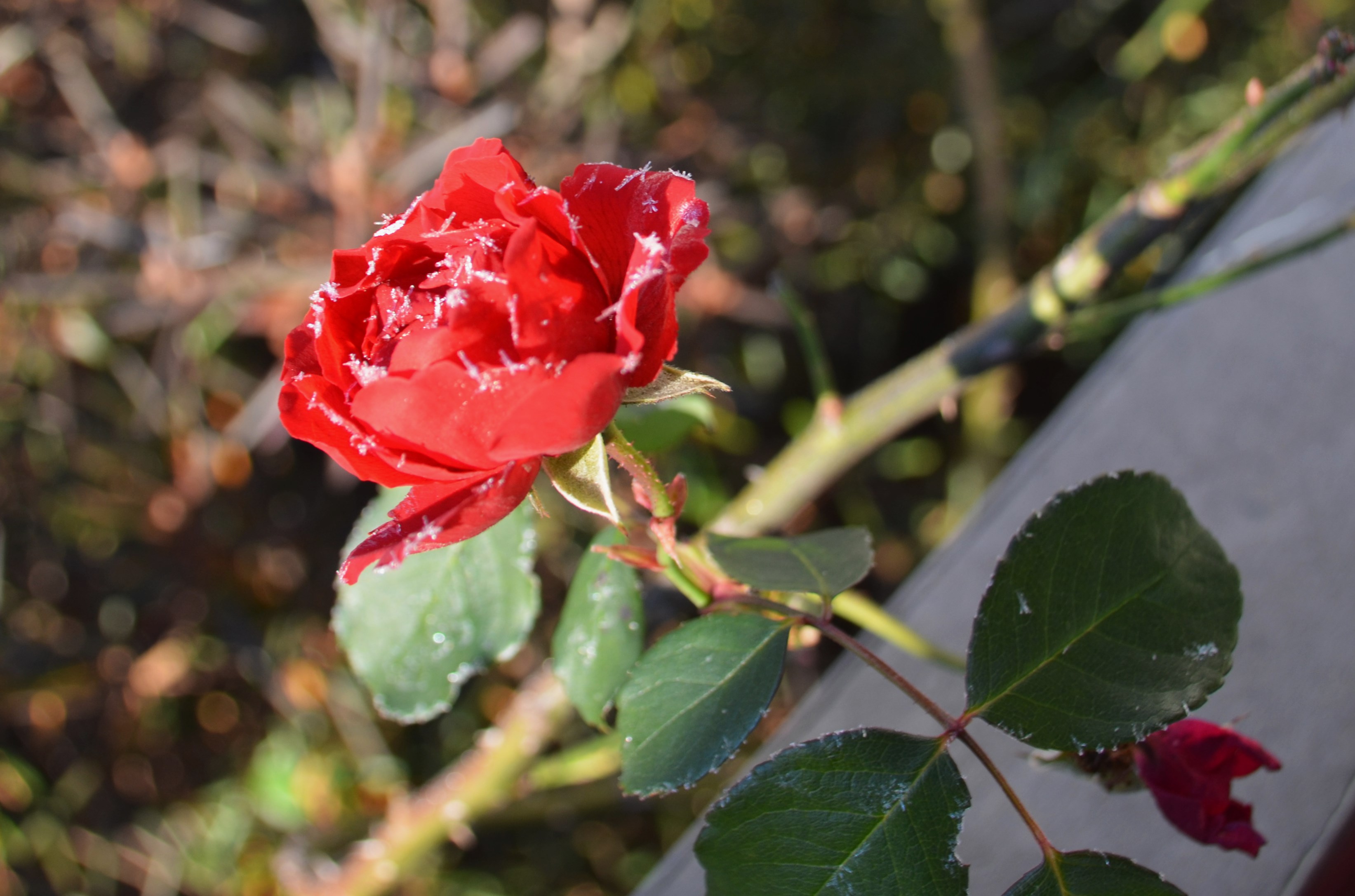
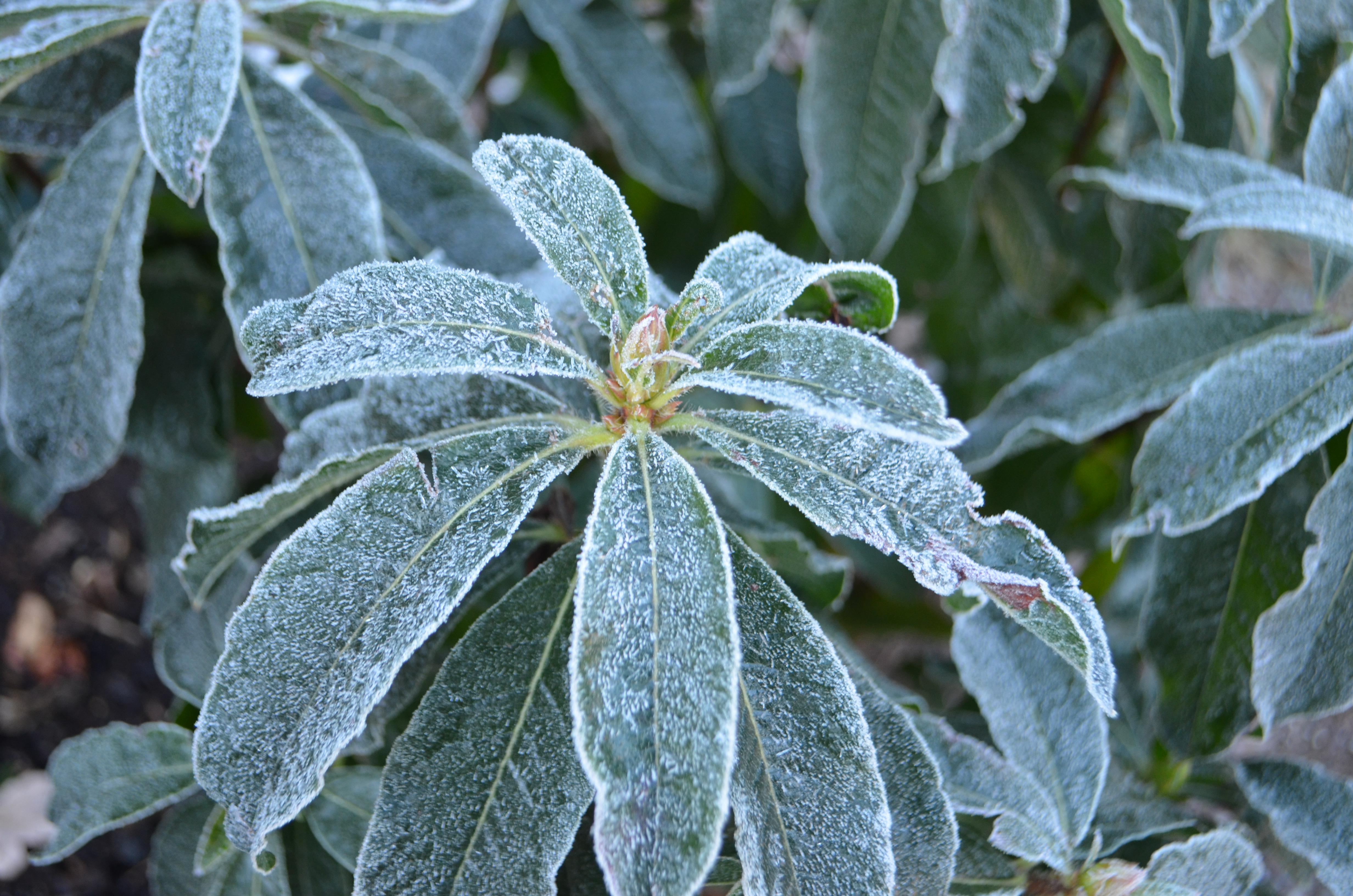
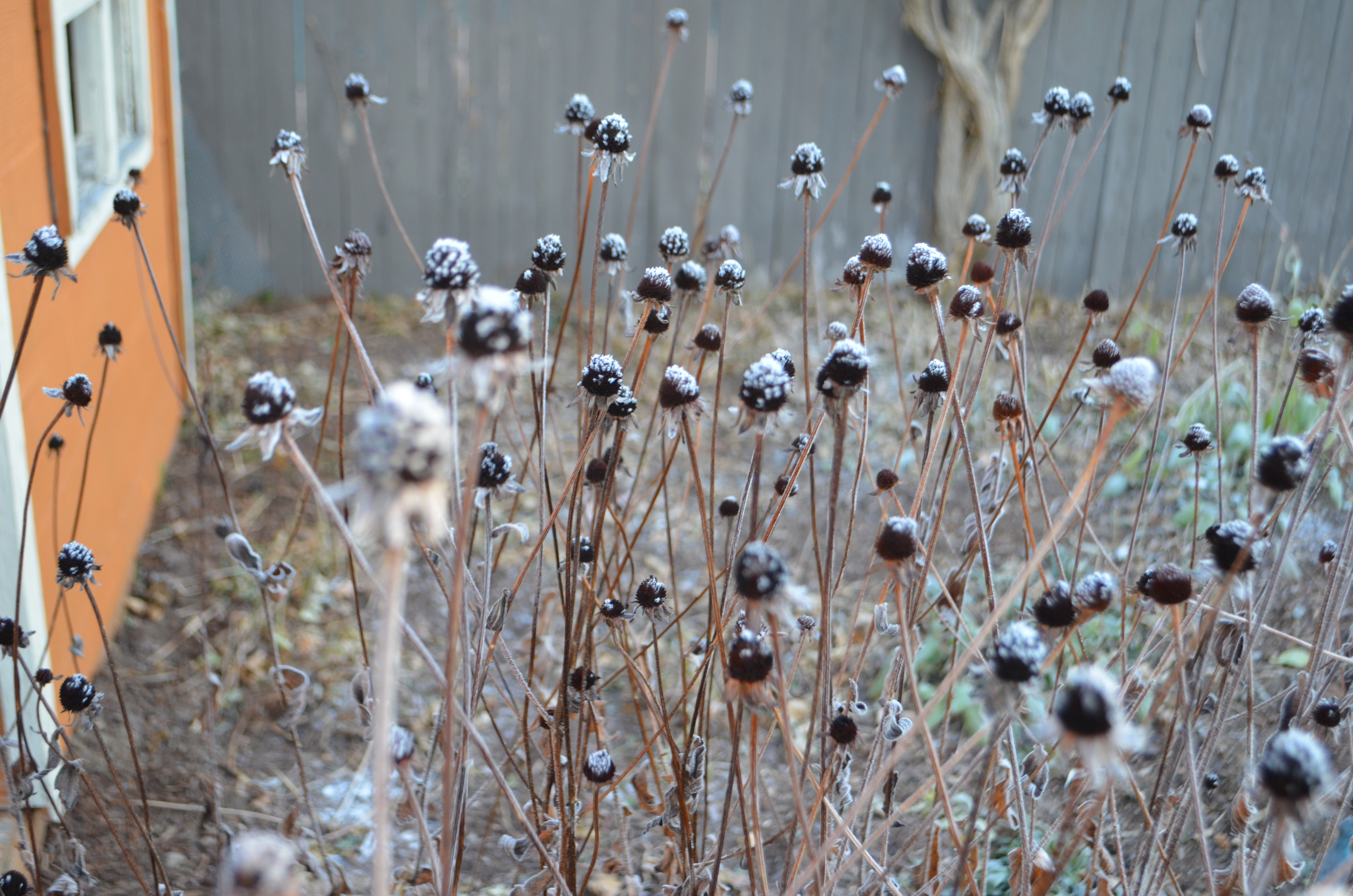
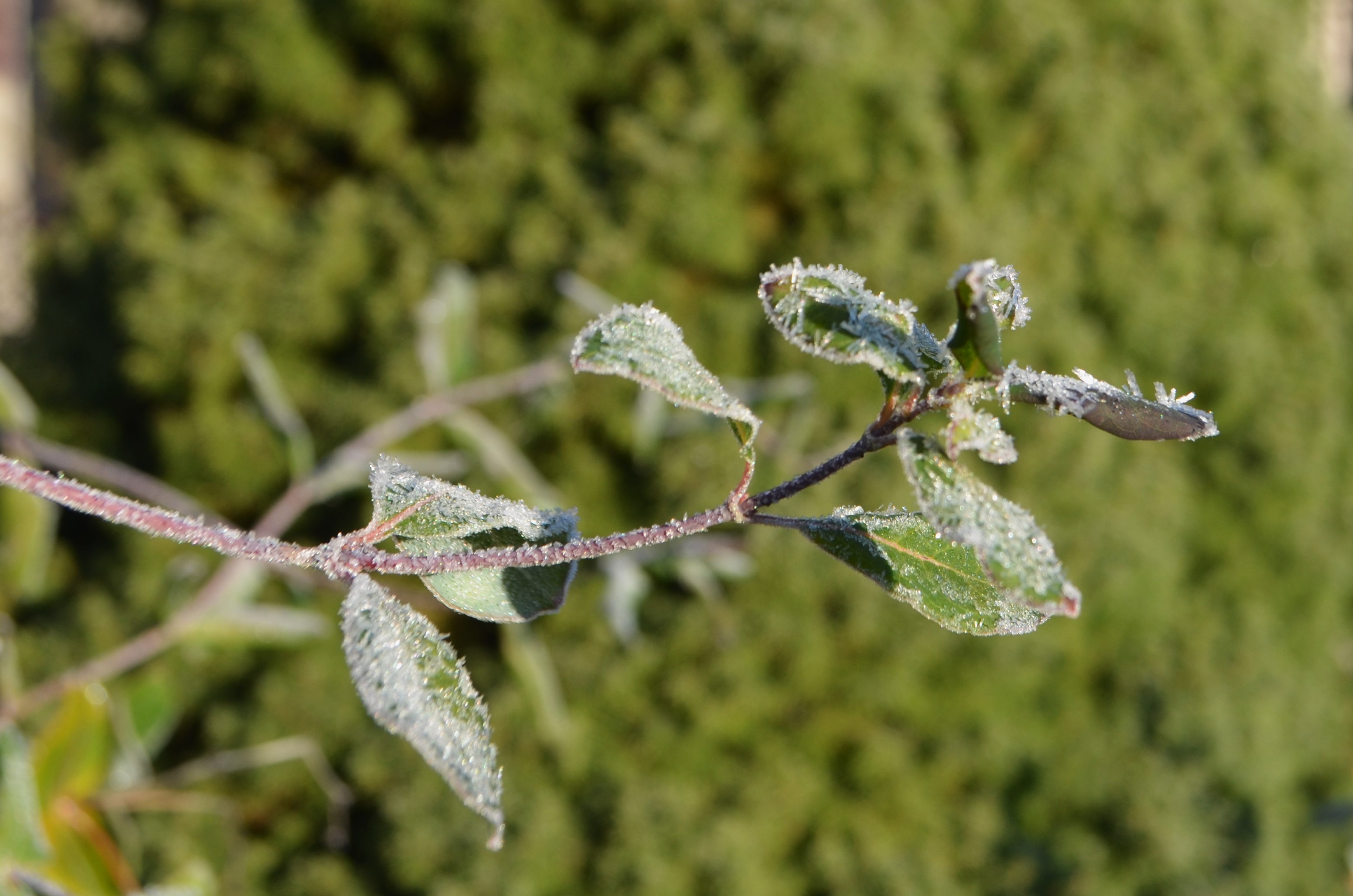
Anyway enough of that, around here Hoarfrost is an exciting event. So many plants look just stunning covered in frosty ice crystals, and hoarfrosts are much more infrequent than black frosts , so picture taking ensues.Here are some I took this week after our first advection, or killing, frost


As I may have mentioned 50 times or so lately, I have been very busy for the last few weeks and the garden has not gotten much attention. Other than the most brief foray to pick the last of the raspberries for breakfast or cut a few stems for a quick arrangement I have not ventured out there at all. That is all about to change as fall clean-up is looming large over my head.
Every time I look out there and wonder when the crew will arrive to cut back, dig up, prune, rake leaves and spread lime and /or compost , I get that sinking feeling in the pit of my stomach because ,honestly, that crew is me. Usually I am not bothered by the workload at all. I leave lots of things standing for the birds to have cover and seeds and to provide winter interest so the perennial bed work is minimal. I don’t bring in all the garden ornaments, just what will break during freeze thaw cycles or things made of wood that will rot if left out in all the snow. I don’t do the heavy pruning until the dead of late winter …in my high boots and mittens, wading through feet of snow. But the fact of the matter is that even though the chores are minimal, the time I have to devote to them is nonexistent. Between lectures and workshops, college visits with my older daughter, an out of town wedding, and various other commitments I am wondering how I can possibly get it done.
Today I started a triage style list starting with the things that absolutely positively have to get done or that should have been done already.
Bulbs that remain unplanted, expensive pottery that has to get stored before it cracks from the weather, a few plants that need to go in the ground or just went in the ground and need water as there has been zero rainfall for what seems like ever, you get the idea.
Then I moved onto things that should get done, but if they don’t, all will be okay…like raking leaves , spreading compost, and cutting back the daylily beds.
Just when I was starting to feel like I was getting a handle on the situation and heading out to start the first few items, Wil announced that he had made an appointment to have the septic system pumped ( an utterly disgusting ,but given the fact that 4 loads of laundry and 7 showers running a day here are the norm, necessary chore) and we had to get the cover dug out today between our weekly football watching date and going to the market ( made necessary by the same people who brought us the showers and laundry).
Of course you know where this is going if you have a septic system… no one ever remembers where the cover is. Oh, we have a general idea, but as for specifically digging a small hole just to excavate said cover in the few minutes available to us today, not a chance in hell.
What ended up happening is just like every other story of my life, painfully comical. Wil started to dig in the garden bed we were sure it was buried in, but he has an injured hand , so who do you think had to assume shovel duty? ( me). We enlisted the help of the oldest shower hogging laundry producing food guzzler ,CJ, to dig hoping we could get it done faster. CJ and I unearthed the entire top of the tank EXCEPT the cover in the fist 30 minutes. Moving further to the left we struck the large cement paver I had put right under the mulch three years ago to mark the cover’s location that had somehow managed to work its way to 2 feet under the ground. It was then we realized we had left ourselves no more room to put shoveled out dirt in order to get to the cover that lay beneath it and actually had for the last few minutes been piling dirt ON TOP of it.
A little dirt shuffling and a lot of swearing later, we finally managed to find and dig out the cover. I stayed outside to replant all the things we had to rip out of the garden while digging, the guys went in to catch up on the football game, and while staring in the general direction of the large hole was thinking about
a. how did I forget where the GD thing was for the fifth time since we moved here
b .how the hell did that paver we placed to help us locate the cover get so deep down in the soil?
c. why in the name of all things garden-y did I plant perennials on top of the cover??? and most importantly
d. omg omg omg aren’t there actually TWO covers that we need access too?
I quietly mentioned this to Wil when I came in , and we made the decision to convince ourselves, that no, there were not in fact two covers , and even if there were why couldn’t it be emptied via the one. I will try to plead ignorance and hope and pray that if I am correct, I can beg or pay the people who come to pump it to find the second cover and dig it out. For reasons that boggle the mind, the last plant left standing, the last plant that may actually be growing over the other cover ,is an 6 foot tall 4 foot wide clump of the ornamental grass miscanthis sinesis, whose root system will take a pick axe and Paul Bunyan to extricate……and now I will leave you wondering if you think I know even the tiniest little bit about what I am doing over here.
**************************************************************
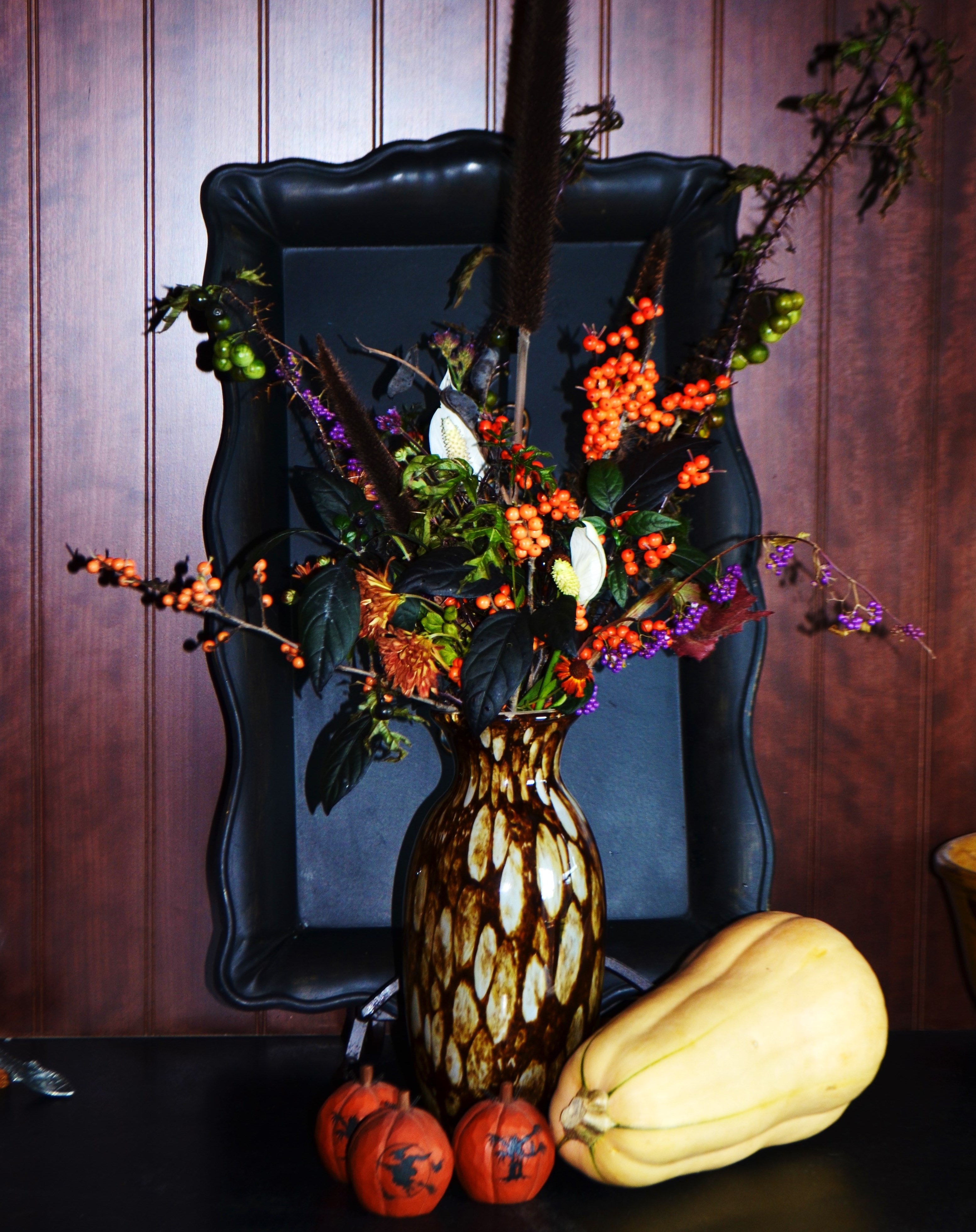
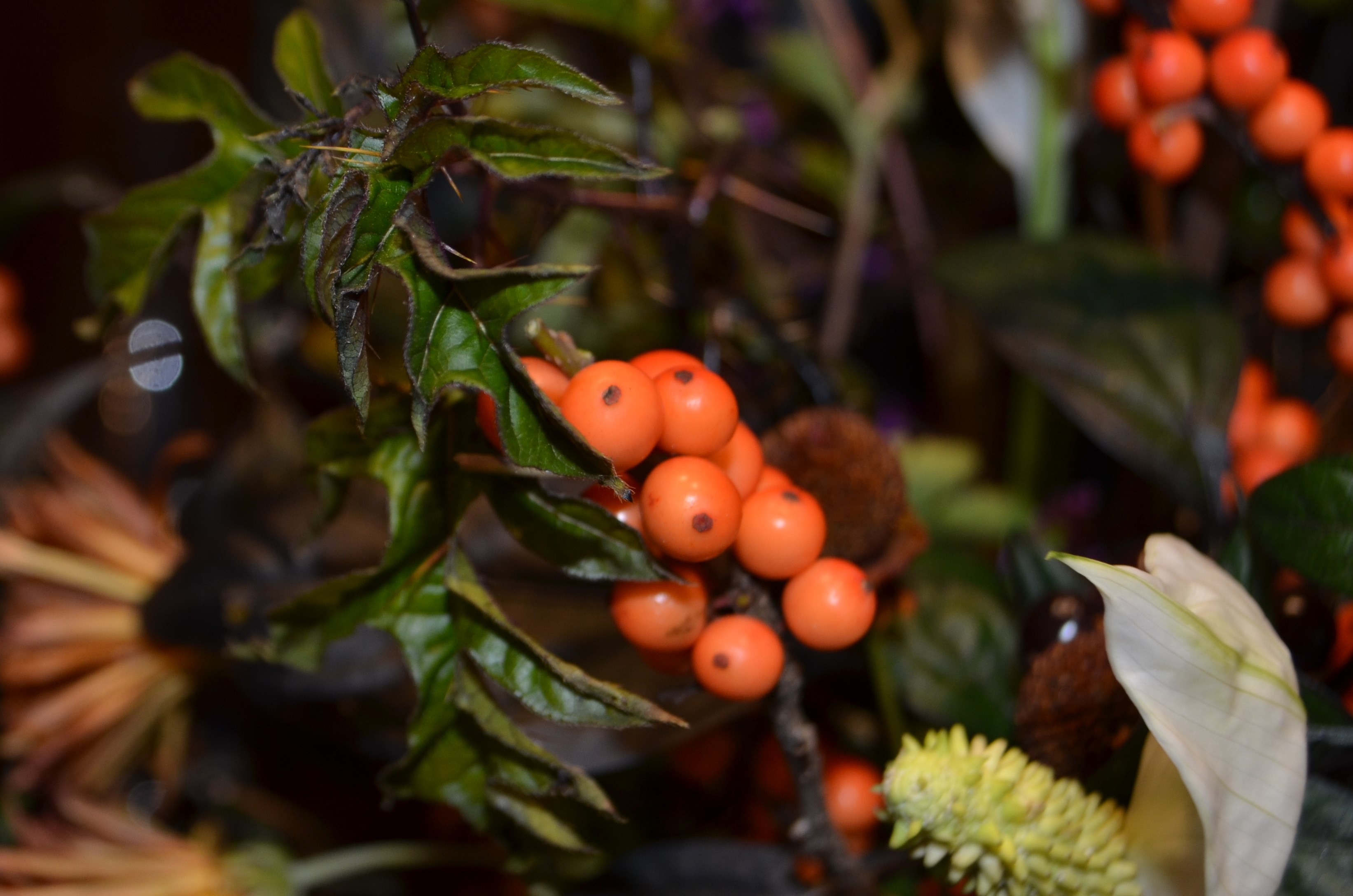
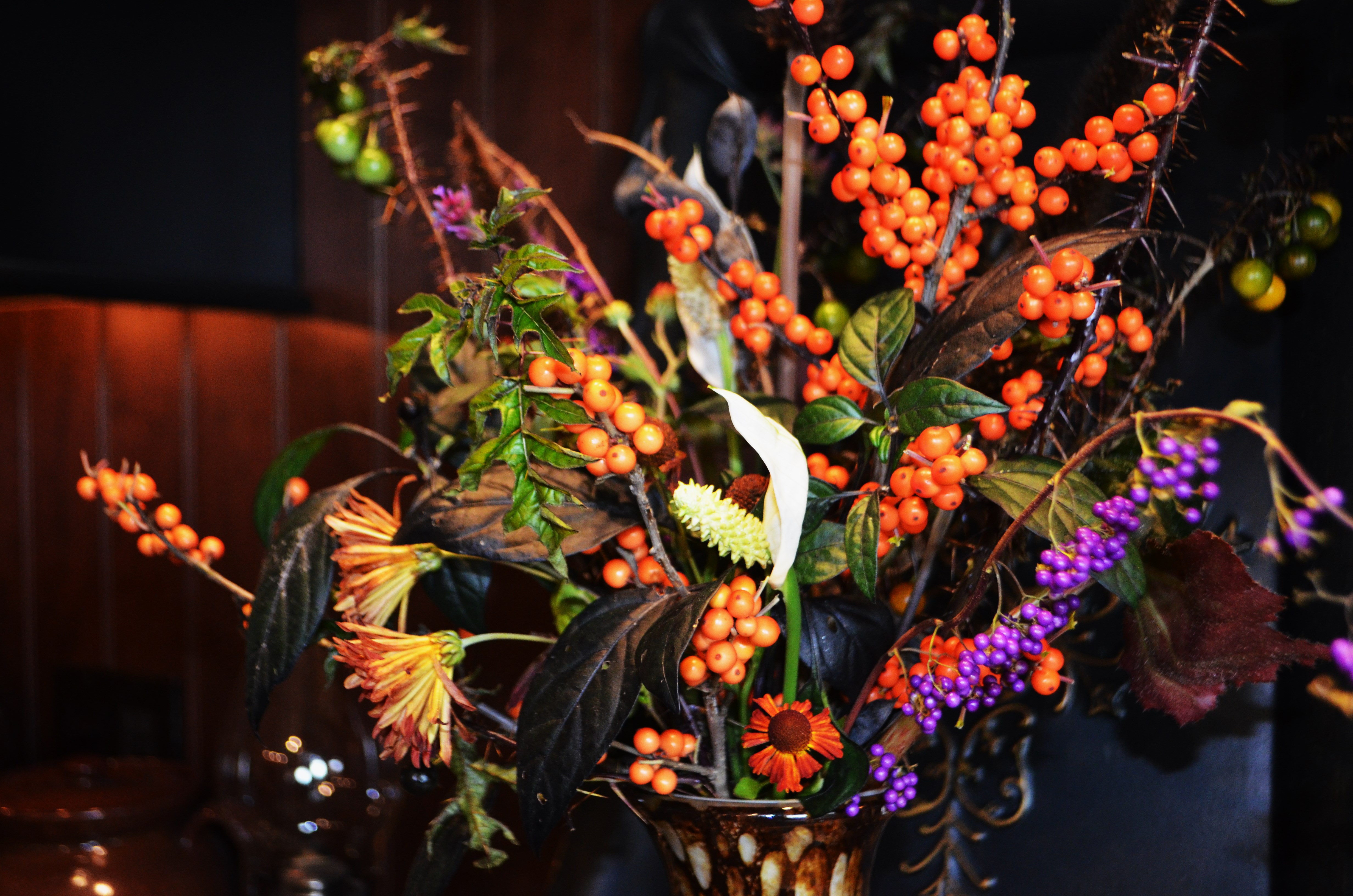
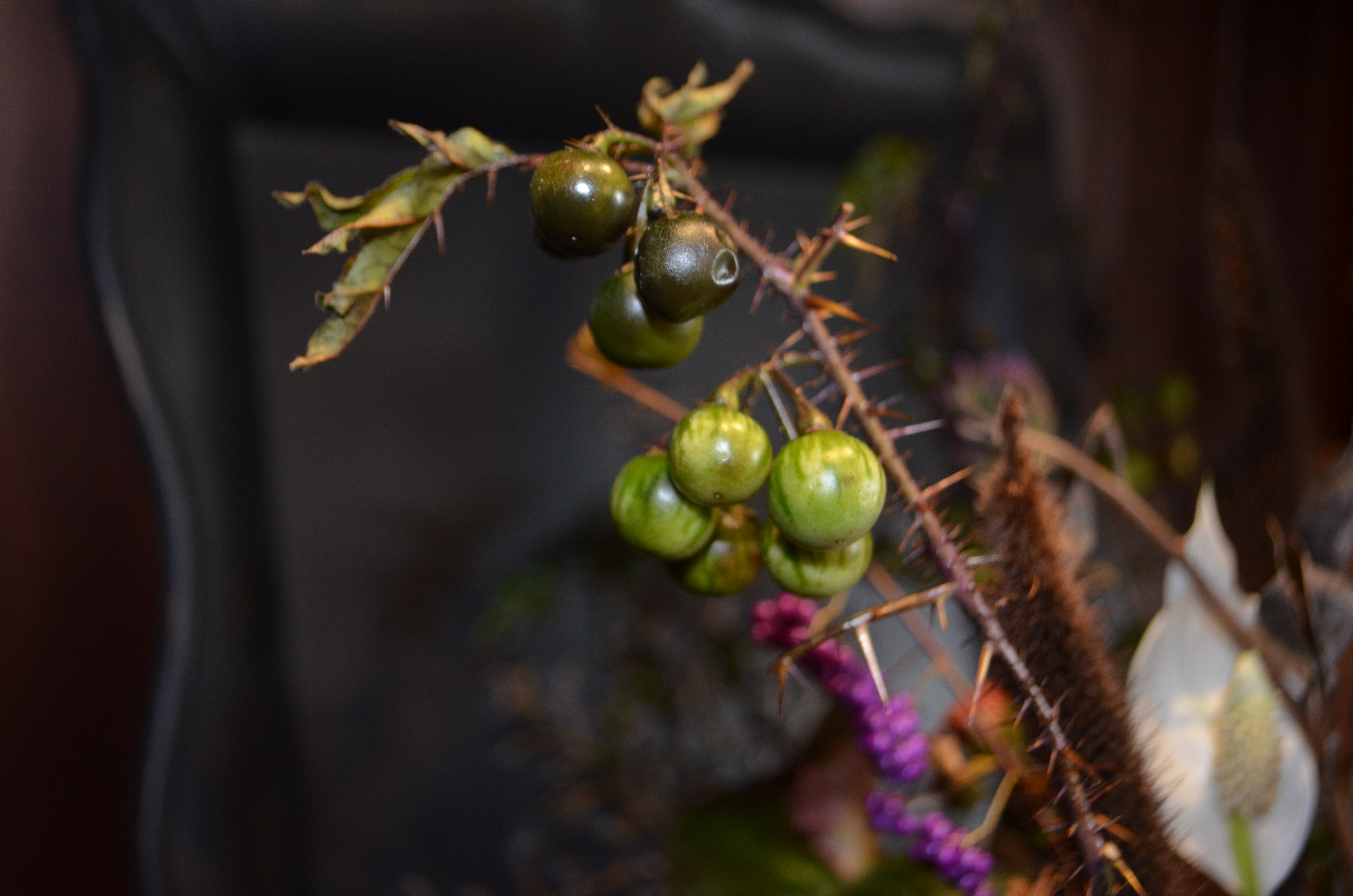
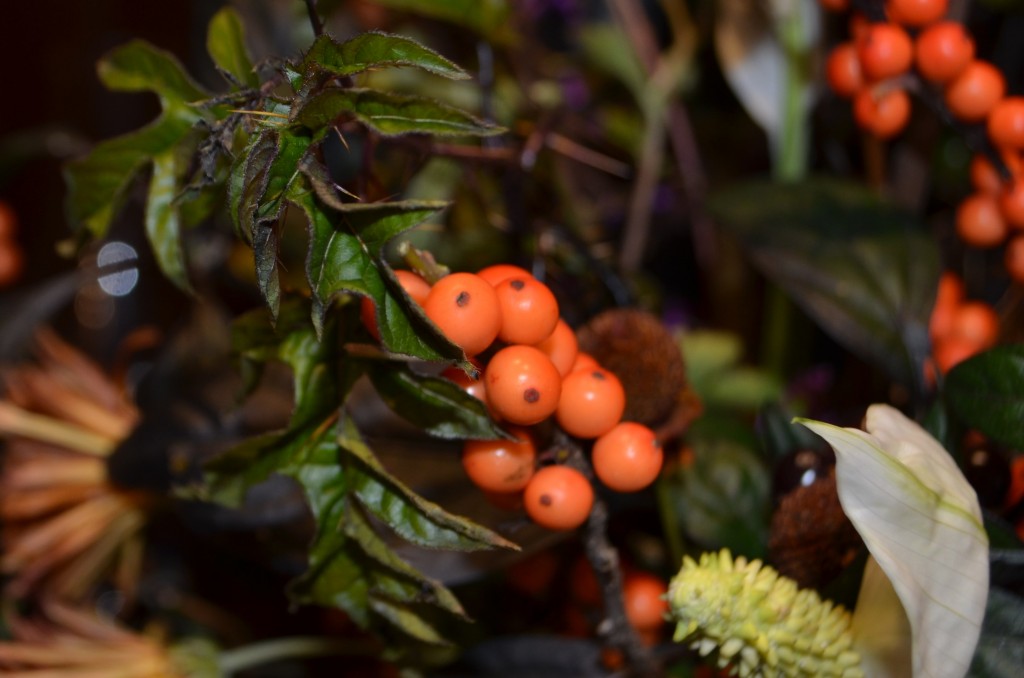
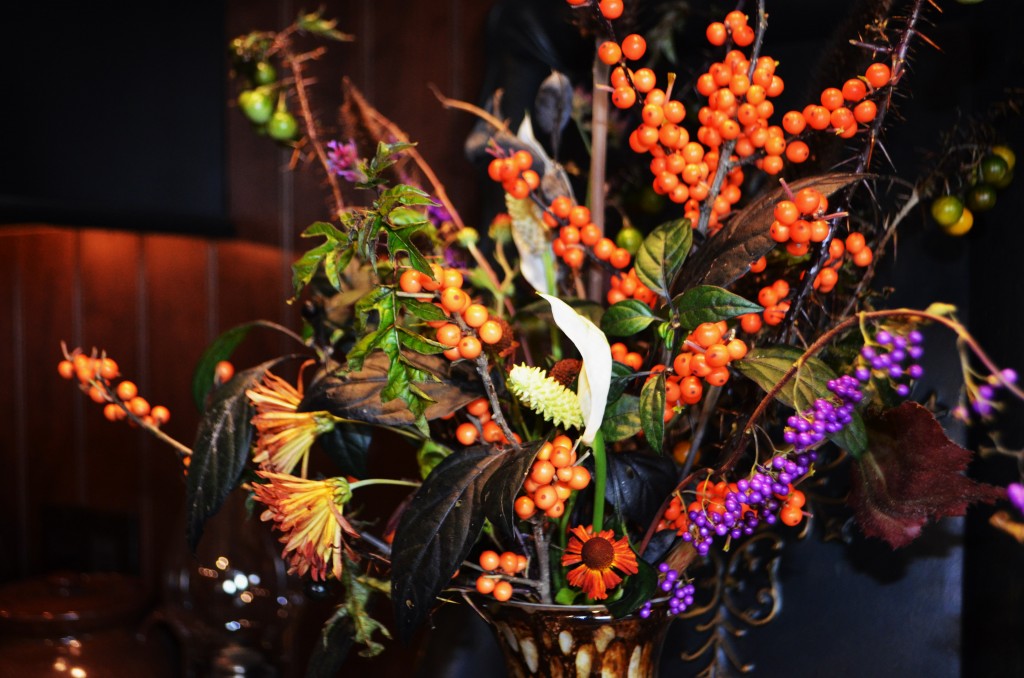
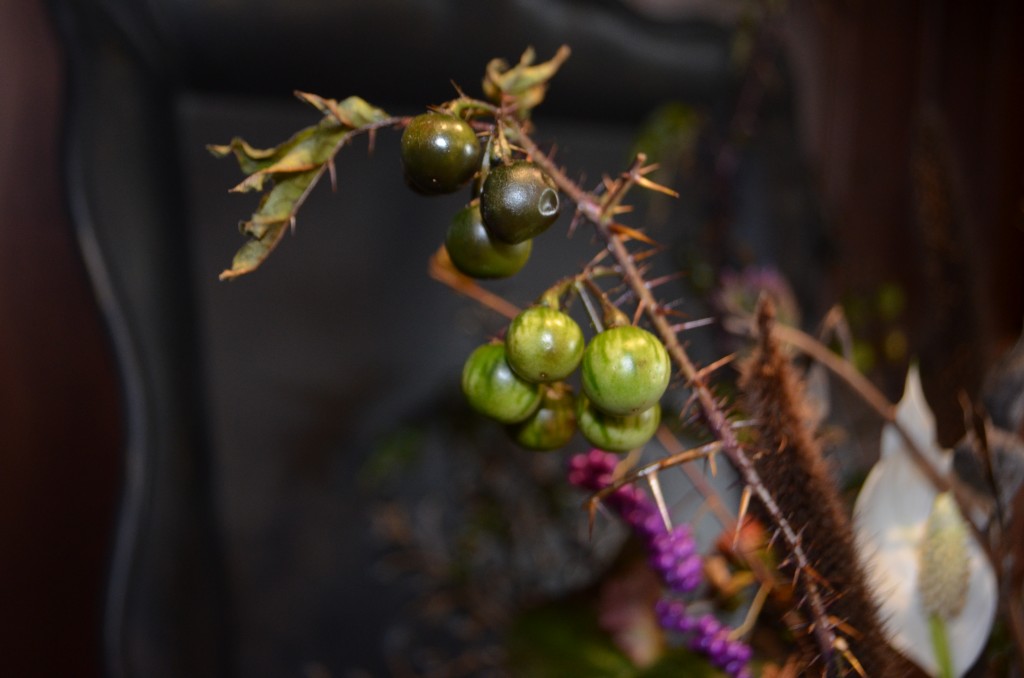
And BTW Happy Halloween! Halloween arrangement made using winterberry ilex verticillata ‘Winter Gold’, calicarpa dichtoma ‘Early Amethyst’, solanum atropurpureum a nasty thorny garden oddity nicknamed Malevolence (wear gloves my friend! there are even spiny thorns protruding from the leaves) millet, ornamental pepper ‘Black Olive’, , seedpods from baptisia australis, seedheads from helenium atumnale, spathifolium , and ‘Matchstick’ and ‘Copper Penny ‘mums 
Off and on I participate in something called Garden Bloggers Bloom Day. It is the brainchild of Carol over at maydreamsgardens.com , and bloggers who want to play along post on the 15th of the month about what is blooming in their neck of the woods and the posts are all linked on Carol’s blog for everyone to view. It is fun to see what is going on in other areas of our country, and even in some distant lands, as bloggers from other countries are welcome to link and often do. It is also a nice record to have personally . If I manage to keep up with my postings I can scroll back through time and see what has been going on in the gardens on a month by month basis.
Some months the 15th happens and I am completely in a fog and don’t get around to posting. Some months, like this one, I feel like “BLAHBLAHBLAHFLOWERSGARDENBLAHBLOOMBLAHYUCK”. Why this happens? Who’s to know. Boredom. malaise, the feeling of ‘been there, done that’, etc etc. October is also a very busy for my speaking business and having to go out and talk about the garden and plants means less time for he garden and plants and also lends itself to feeling the aforementioned feeling BLAHBLAHBLAHFLOWERSGARDENBLAHBLOOMBLAHYUCK.
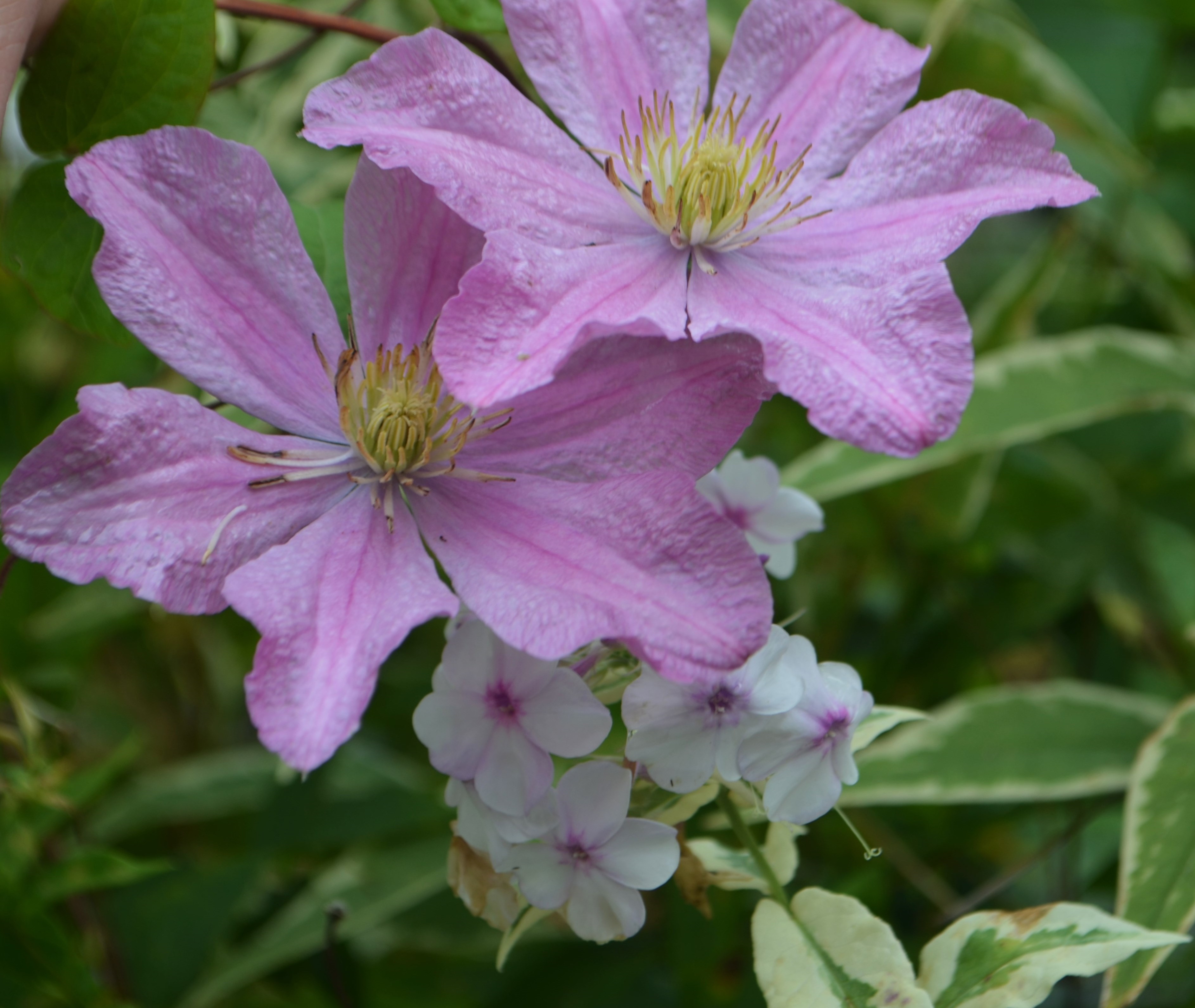
BUT…even though I missed the date completely, I could not miss the opportunity to do a little happy dance online about said garden and one plant in particular because it is so remarkable. The weather here has been delightful, and by this I mean days in the 60s and nights staying very warm mostly in the high 40s and 50s. We have had a few scattered light frosts, but they have only affected the coldest most exposed parts of the gardens and actually helped the other parts providing very dramatic fall colors and the romantic look of a frosty garden without the freezing to black death part. Usually by now the last of the clematis are just finishing. Clematis ternifora, or Sweet Autumn as it is commonly known ,is the latest clematis to start blooming, and it is typically accompanied by a few stragglers on Pope John Paul II and maybe Ville de Lyon or Elsa Spath. This year however, the Comtesse de Bouchard out front began another round of blooming AFTER the Sweet Autumn started and is still blooming now. A very rare and very wonderful treat for me.
What makes it even better is that the variegated garden phlox ‘Nora Leigh’ that the Comtesse winds her way through has also decided in solidarity to continue blooming even though the cold temps have been affecting her foliage . What a team player ! Thank you Nora Leigh, your commitment to making this garden all it can be is duly noted.
Here in New England and other northern regions of the USA, our growing season is limited due to cold temperatures. Since I have been gardening it has been my mission to extend that season as long as humanly possible, and thus my constant hunt for plants that bloom into October and November.
One garden stalwart that certainly helps in this pursuit is Sheffield mums (chrysanthemum rubellum). Sheffield mums are NOT the florist mums you can get at the garden center now. See my post here for info on all things ‘”mum”. Instead Sheffield mums are very late perennial plants that overwinter here quite well. I have a variety called ‘Copper Penny’ ( below) and cultivar ( a cross) named ‘Wil’s Wonderful’ and the tried and true pink version . The Sheffield pink plants are easy to find via friends and fellow gardeners and often local garden club plant sales in the spring which is when they should be (as any mum should be) planted. That is why you don’t find them in garden centers routinely, they are not in bloom when they should be sold and that is not good marketing, even though it is in fact excellent GARDENING which is something many GARDEN centers choose to overlook. The others I have seen on Lazy S Farms website and that is in fact where I ordered my ‘Wils Wonderful’ from. 
Another that is also a tough find is the Montauk or Nippon Daisy. More and more I am seeing this plant available and that is a good thing as it is such an asset to the fall garden. Montauk Daisy has very woody stems and cool leathery like foliage
. Its flowers are just like those of Shasta daisy though.
Both the Sheffield mums and the Montauk daisies get an early summer shearing here to keep them from getting leggy and too tall by October. Both also benefit from leaving their foliage intact and uncut through the winter to help them survive .
The third plant is a favorite here because it is completely rabbit proof.
( Montauk Daisies are said to be as well but looky here, that is rabbit damage my friend)
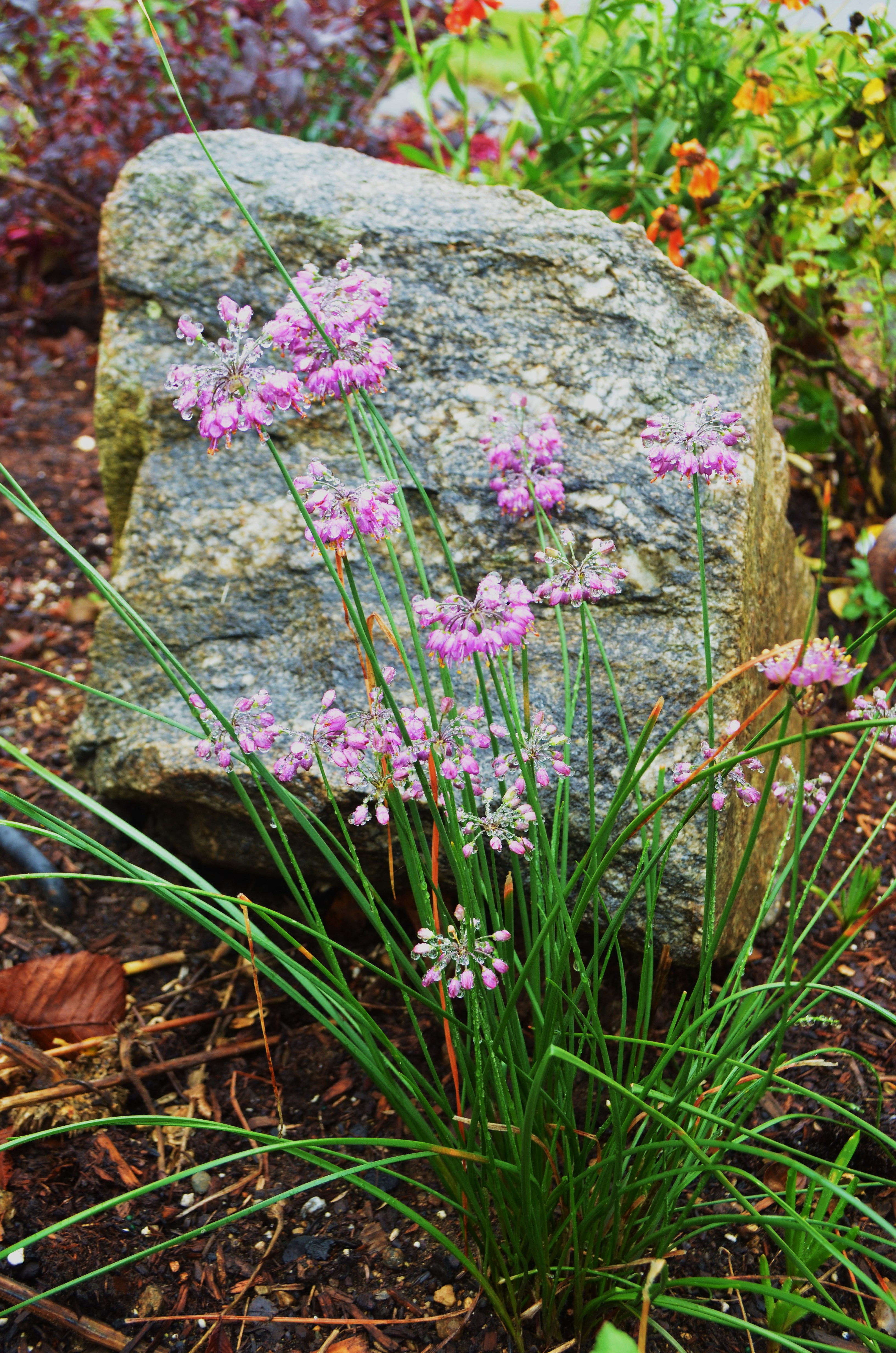
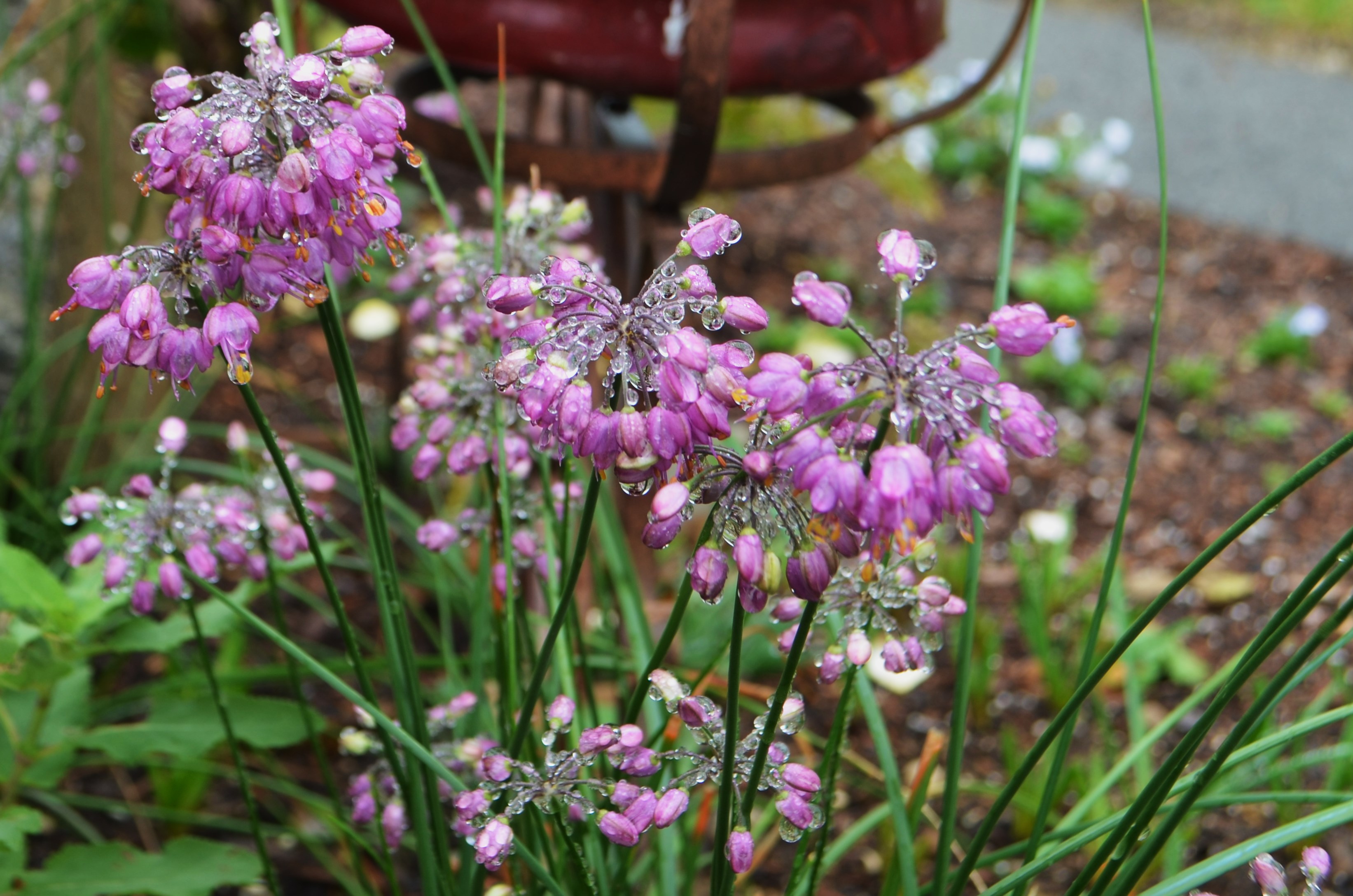
Allium thunbergii ‘Ozawa’ has lovely strappy foliage and adorable nodding blooms. Only growing to about 1-2 feet it is easy to find a home for. Like all alliums it prefers a sunny well drained spot to grow and other than that is undemanding of your attention. It is super hardy , to zone 4. The good thing about it blooming now is that it reminds me, and hopefully you too, how useful alliums are as an easy to care for and visually interesting plant at the perfect ( well really only) time to plant them. You can find allium bulbs in nurseries and garden centers now and popping a few in the ground here and there will bring loads of delight next year. A few of my other favorites are ‘Purple Sensation’, Allium schubertii which looks like fireworks, and the cute but floppy drumstick allium (a. sphaerocephalon).
‘Ozawa’ looks great in a rock garden , although those in this photo are actually in the front garden, just near a rock. Great companion plants for the rock garden are earlier blooming saxifrages or even thyme, but in this garden they are planted with peony and perennial geraniums for spring color, allium senescens var. glauca or curly allium, clematis , sunflowers and verbena that bloom in the summer, and heleniums for the later part of the season. All alliums make great and long lasting cut flowers.
All three of these plants have the added bonus of feeding our favorite winged pollinators, the bees, in warm fall weather when they are still active yet nectar sources are more scarce.
(Vincent van Gough in a letter to Emile Bernard)
An true artists eye, a true artists statement ….
It seems so clear once we start to notice, some colors reveal themselves more clearly when given a foil .
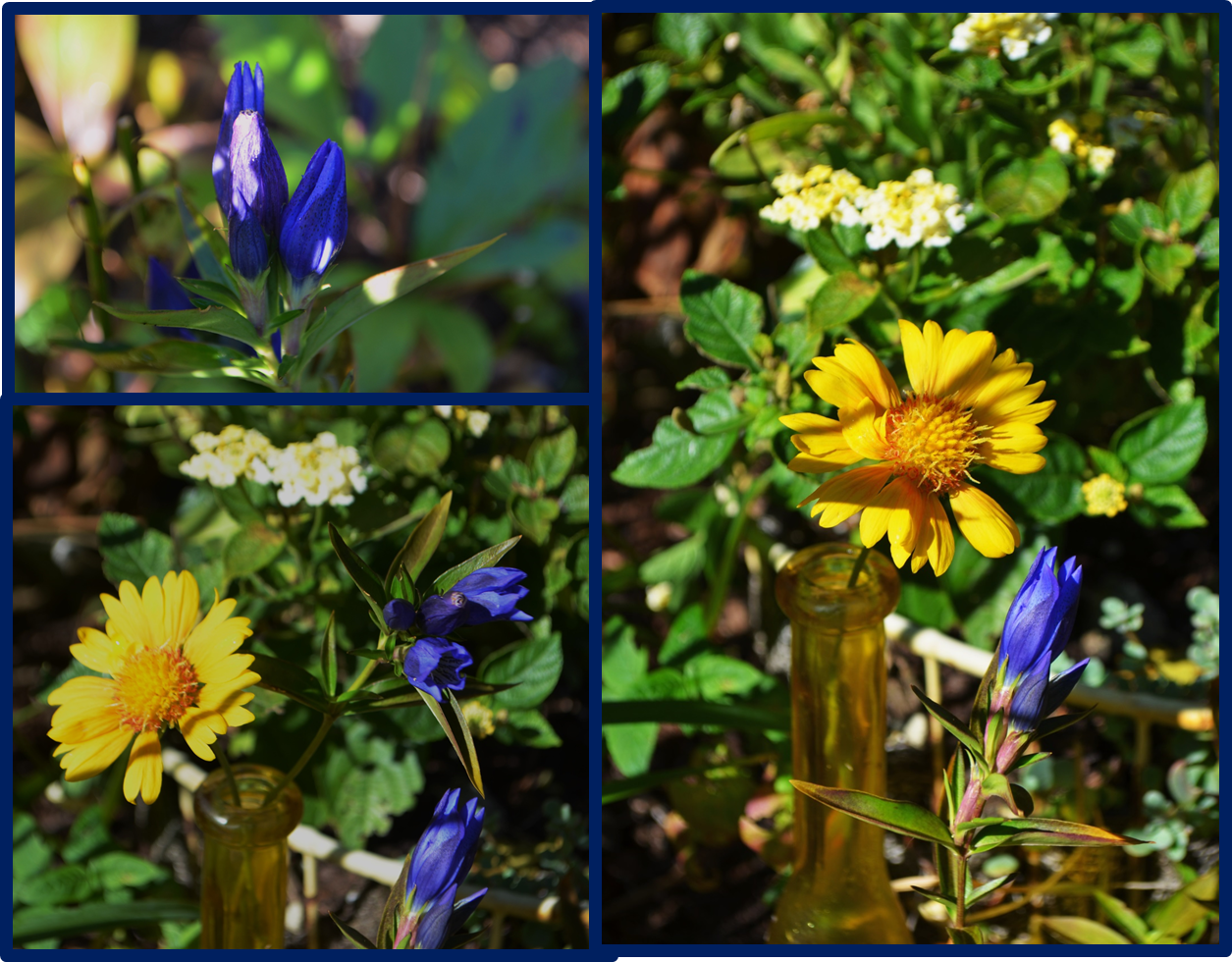
Gaillardia ‘Mesa Yellow’ and Gentian ‘True Blue’

This time of year I have a constant reminder of our battle with the bunnies, namely the dearth of asters in the garden. Here in the Burrow lots of plants get nibbled, some even suffer more moderate damage, but the asters get eaten to the ground. Apparently , asters are bunny crack.
Out in the back 40 I had planted several clumps of an aster called ‘Alma Potschke’, a hot pink that blended well with all the cultivars of sedum that would be blooming at the same time. For about a year , all was well, then my friend Christina noticed on a garden stroll that the sedum looked like something was munching on it and a closer inspection revealed the tell tale diagonal shearing on the stems that screams “rabbit!!!!!” I did not even notice at first that the asters were eaten too because turns out, they were just gone, gone ,gone.
A look into the side rock garden revealed that the clumps of ‘Purple Dome’ aster were also missing.
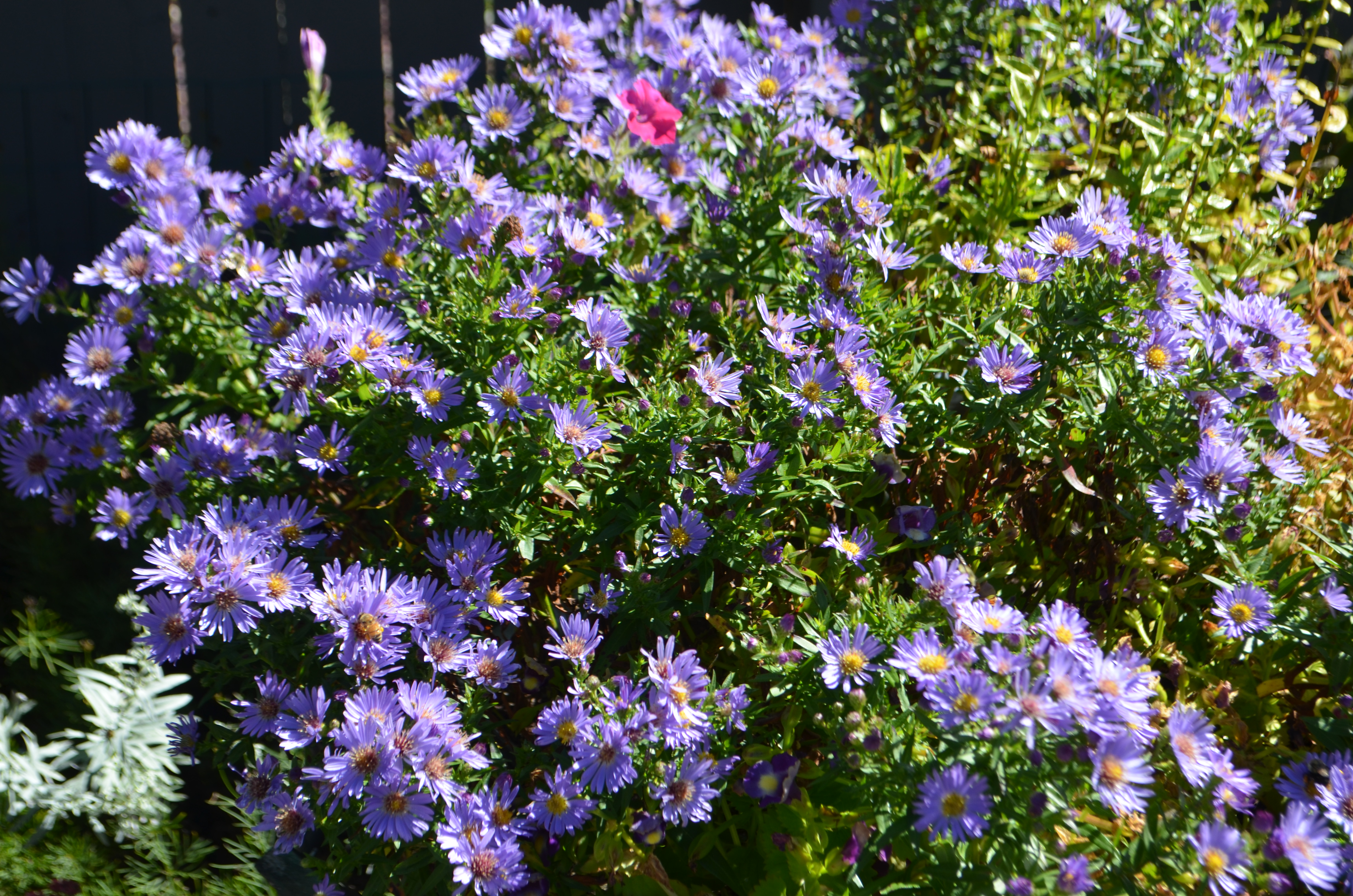
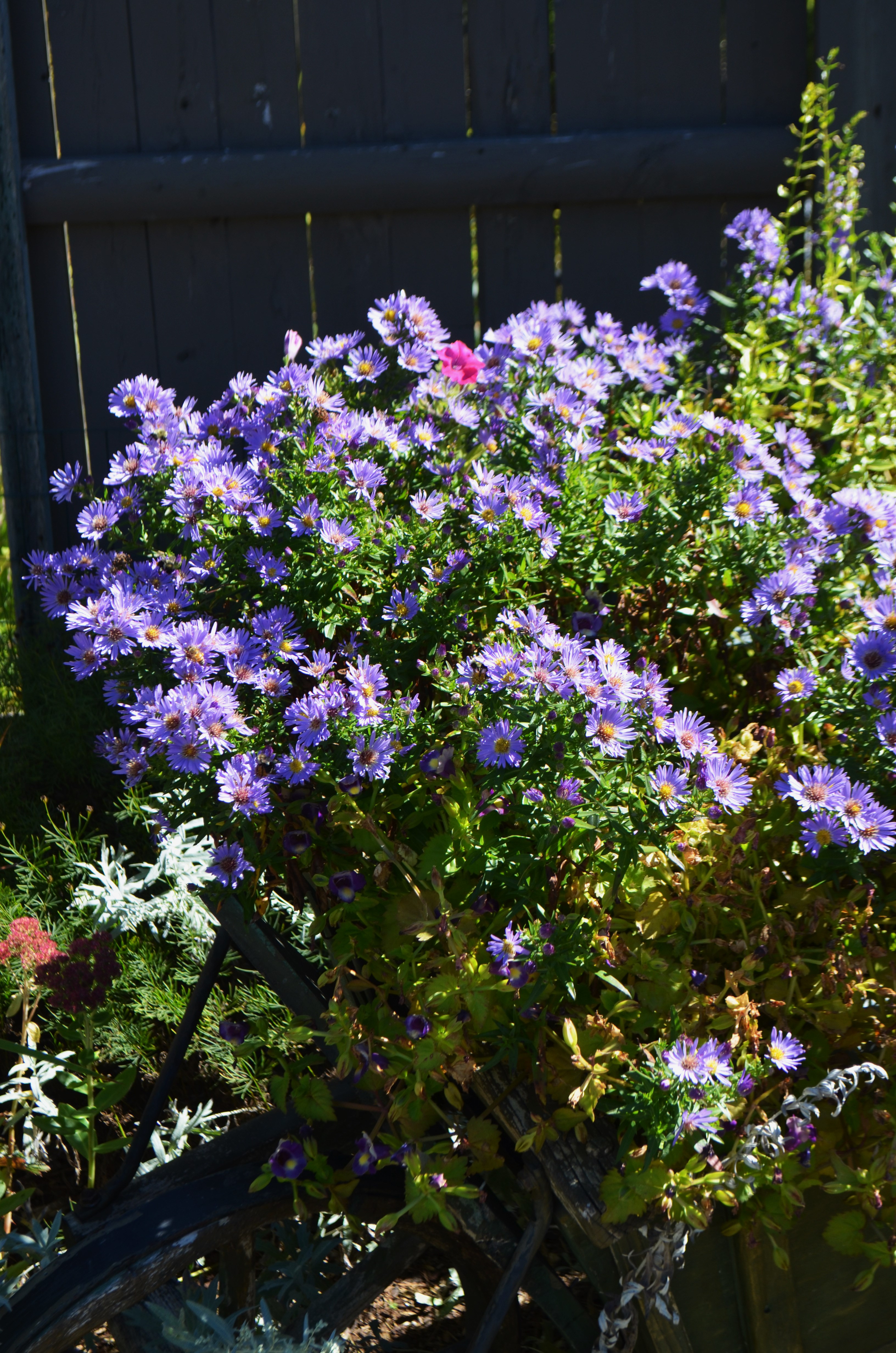
Fast forward to the following spring. I attempted to protect the emerging asters with repellant sprays, cages of chicken wire around them, moving a few to a location closer to the house and dogs, etc. all to no avail. Any aster that dared show itself was chewed instantly . They would move mountains to get to them , digging under the cages, knocking them over even though they were staked in the ground and the resulting struggle to get their drug of choice wreaking havoc in the garden. I reluctantly purchased some shorter Woods Asters ‘Blue’ and placed the plants in a 3 ft .high wheelbarrow planter that, until they learn to fly , is off limits.
Last year I decided to try to grow a kalmeris incisia cultivar called ‘Blue Star’ that looks like an aster, and the species is actually called Indian aster when it grows wild around here. Problem is , even though the bunnies don’t touch it ( as is startlingly true with most native plants. My bunnies prefer EXOTIC plants with the exception of asters ) it blooms much earlier in July and August and does nothing for the late season garden. Sigh . ( picture of it to right courtesy of google images)
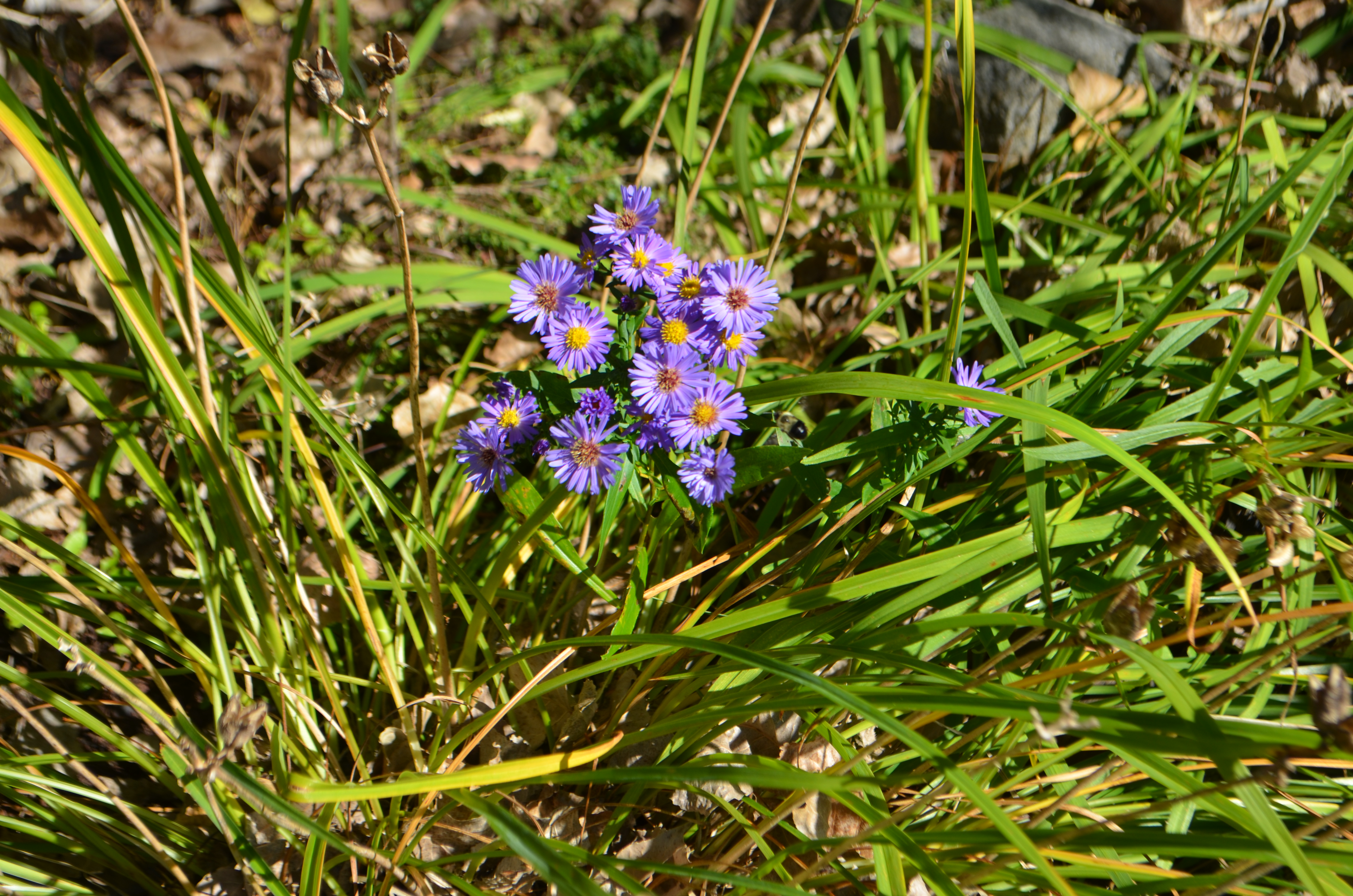
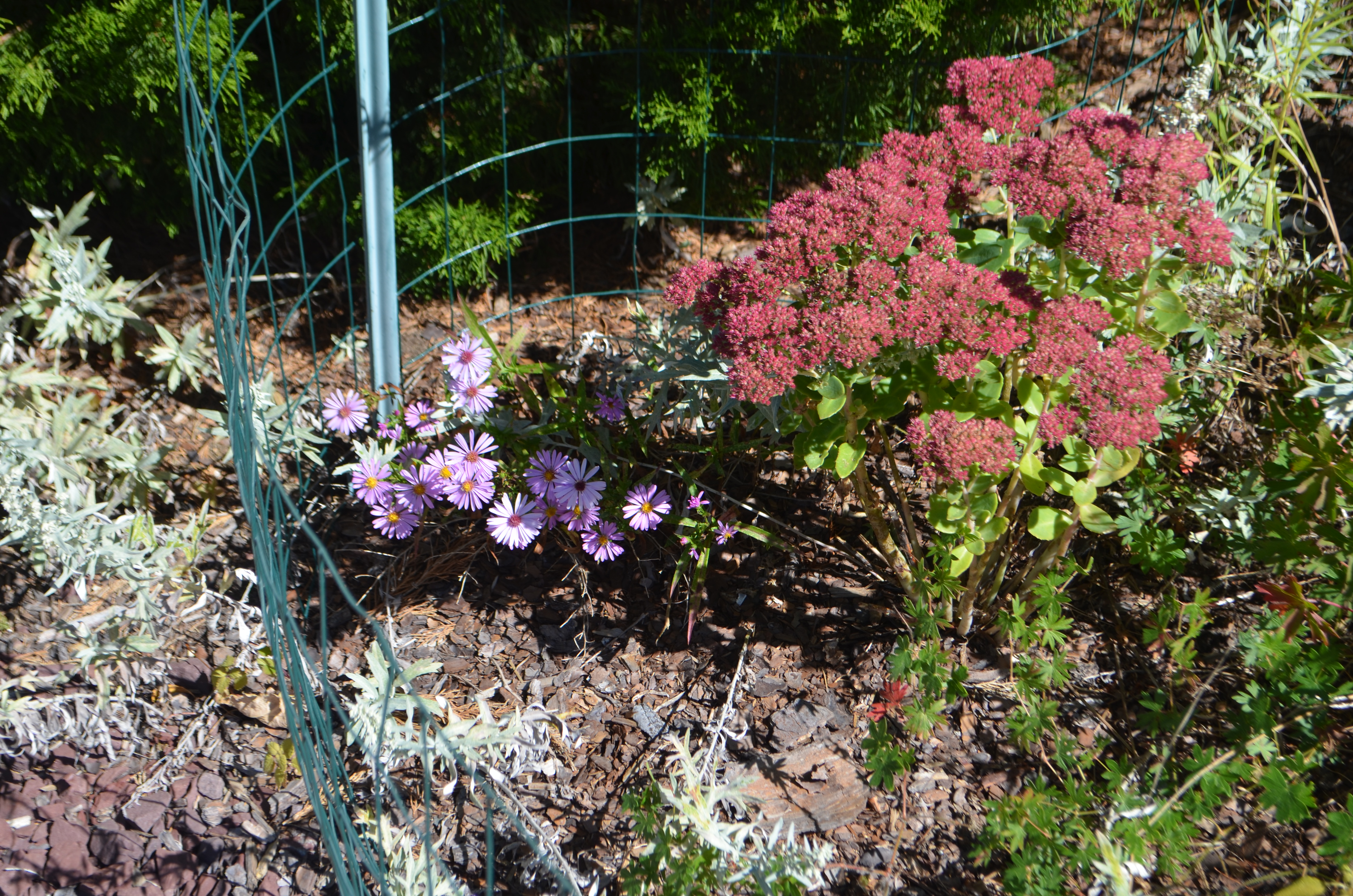
This year we remarkably have a surviving Woods aster ‘Pink ‘ in the caged area near the pool and in the back 40 one, yep count ’em , one stem of ‘Alma Potschke’ and in the rock garden there is also one lonely ‘Purple Dome’ stem. I wouldn’t even be generous enough to call them plants, they are just single stems, and it begs the question….WTH????
Why leave one? Did some self help program dictate that as part of your aster recovery Mr. Bunny? Or could you possibly understand that if you eat every last leave there will never ever be asters for you again??
I have done nothing to protect the intrepid plants, and will not move them lest I disturb whatever magic is keeping them uneaten. Maybe next spring I will try to propagate a few divisions into more containers where they can again light up the fall garden.

Now, on to the taxonomists. Taxonomists are my nemesis. They are evil I tell you. I intellectually understand that they are trying to accurately place plants into their correct families , and that the use of DNA technology has enabled them to right wrongs in the naming process and reassign plants to their REAL family members. It’s just, well, I mean…. Come ON! Knock it the heck off!!!! I can’t keep up.
When I think of them diligently working to reclassify ( read: confuse) I want to get into the Dirty Dozens with them, you know like …” your mama’s so fat you could be on Mars renaming all their plants and you could see her clear as day” or …” your mama’s so dumb she thought white woods aster and new england aster were still in the same genus.
You can play along, I know you wanna’…….
Asters as we know and love them, are now reclassified into several different genera including Symphyotrichum and Eurybia and other frankly hideous and unpronounceable names.
Do you think if I start throwing around Symphyotrichum novea angliae the bunnies will be confused too and leave my ASTERS alone???